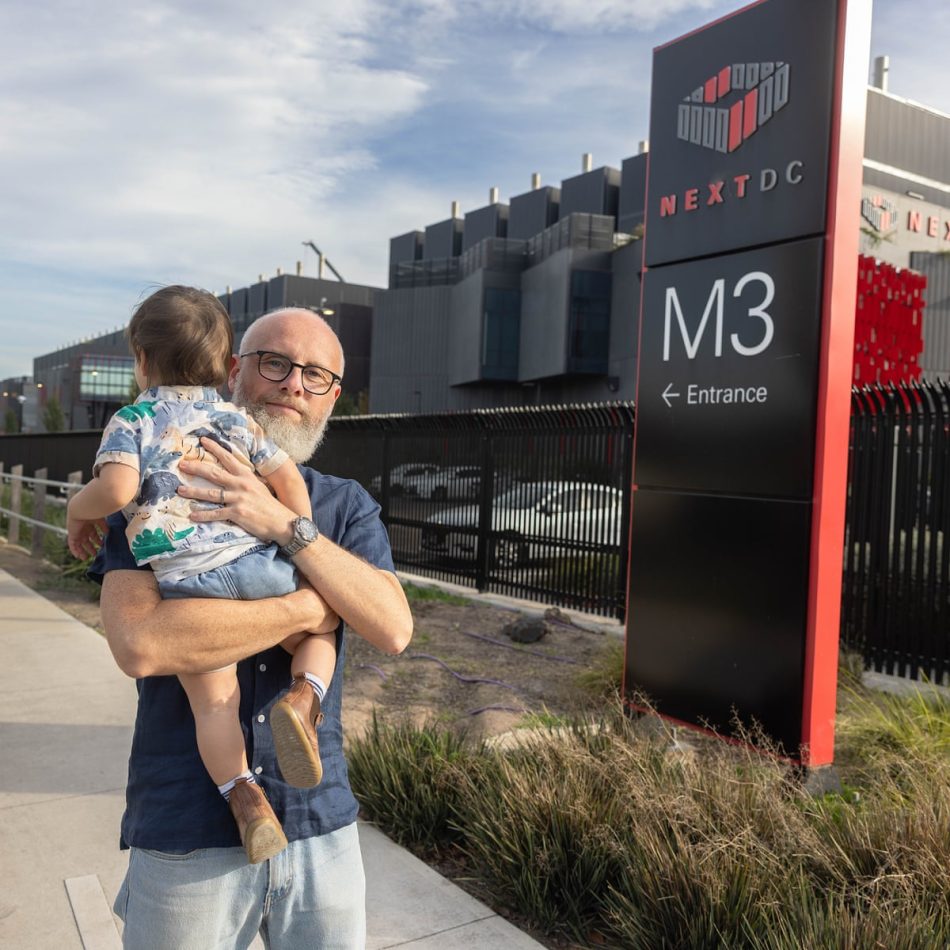
Under a cloud: the growing resentment against the massive datacentres sprouting across Australian cities
In recent years, Australia has witnessed an explosion of datacentres, particularly in urban areas. These massive facilities, often referred to as “hyperscale AI factories,” are designed to support the increasing demand for data processing and storage. However, this rapid expansion has sparked significant concern among local residents who fear the environmental and social impacts of these developments.
The Case of M3 Datacentre in West Footscray
One of the most notable examples is the M3 datacentre located in West Footscray, which is touted as Australia’s largest hyperscale AI factory. Local resident Sean Brown, who frequently walks past the facility with his young son, has voiced strong opposition to its presence. He describes the noise from construction, the looming structures, and the incessant hum of machinery as disruptive to the community.
Brown expresses his deep concern for his child’s future, stating, “He is growing – neurologically, pulmonarily, physically – in the shadow of a facility whose cumulative environmental impact has never been assessed.” He believes that the datacentre’s expansion, which is expected to double in size by the end of 2027, poses a significant threat to the well-being of local residents.
Environmental Concerns
The environmental implications of datacentres are becoming increasingly apparent. These facilities consume vast amounts of electricity and often rely on diesel generators for backup power. The M3 datacentre plans to expand its number of generators from 40 to 100, raising concerns about air quality and noise pollution in the surrounding area.
Critics argue that the original zoning decisions did not adequately consider the scale and impact of these datacentres. Brown emphasizes that the location is inappropriate for such intensive industrial operations, which are often situated too close to residential neighborhoods.
Government Response and Local Sentiment
Despite the concerns raised by residents, the Victorian government is under pressure to approve the expansion of the M3 datacentre. Proponents argue that such developments are essential for Australia to remain competitive in the global data economy. NextDC’s CEO, Craig Scroggie, has publicly stated that the facility is crucial for building Australia’s digital future.
However, local councils, such as the Maribyrnong local council, have expressed opposition to the expansion. They are currently awaiting a decision from the state government regarding the planning approval. A spokesperson for the Victorian planning minister, Sonia Kilkenny, indicated that the proposal is under consideration but refrained from providing further comments.
Concerns in Other Regions
The sentiment against datacentres is not limited to Melbourne. In Lane Cove, New South Wales, residents are voicing their concerns over a proposed 90MW datacentre named Project Mars. This facility would be the fourth datacentre in the area, which already has a significant concentration of such developments, occupying 40% of local industrial zones.
Local resident Daniel Bolger highlights that the proposed datacentre would be situated next to Blackman Park, a vital green space for the community. He fears that the construction of the datacentre will negatively impact the park, which serves as a recreational hub for many residents. “They’re going to put datacentres right next to it,” Bolger laments.
Community Engagement and Future Planning
Residents in Lane Cove have raised concerns about the proximity of the proposed datacentre to schools and the potential for increased power demands in the area. The New South Wales planning minister, Paul Scully, has stated that public consultation is encouraged and that a comprehensive assessment of energy needs will be conducted before any decision is made.
However, many locals feel that their voices are being sidelined in the planning process. Bolger notes that the community is worried about the cumulative impact of multiple datacentres in close proximity, which could lead to blackouts and hinder housing development in the area.
The Broader Implications of Datacentre Expansion
As Australia continues to invest in its digital infrastructure, the debate surrounding datacentres is likely to intensify. While proponents argue that these facilities are essential for economic growth and technological advancement, residents are increasingly concerned about the potential environmental and social costs.
The rapid expansion of datacentres poses a challenge for urban planning and community well-being. As cities grapple with the need for digital infrastructure, it is crucial to strike a balance between progress and the preservation of local quality of life.
Conclusion
The growing resentment against massive datacentres in Australian cities highlights the complexities of modern urban development. As communities voice their concerns, it is essential for policymakers and developers to engage with residents and consider the long-term implications of these facilities. The future of Australia’s digital landscape must be built on a foundation of sustainability and community well-being.
Note: This article reflects the concerns and opinions of local residents regarding the expansion of datacentres in their communities. Ongoing discussions and consultations are necessary to address these issues effectively.