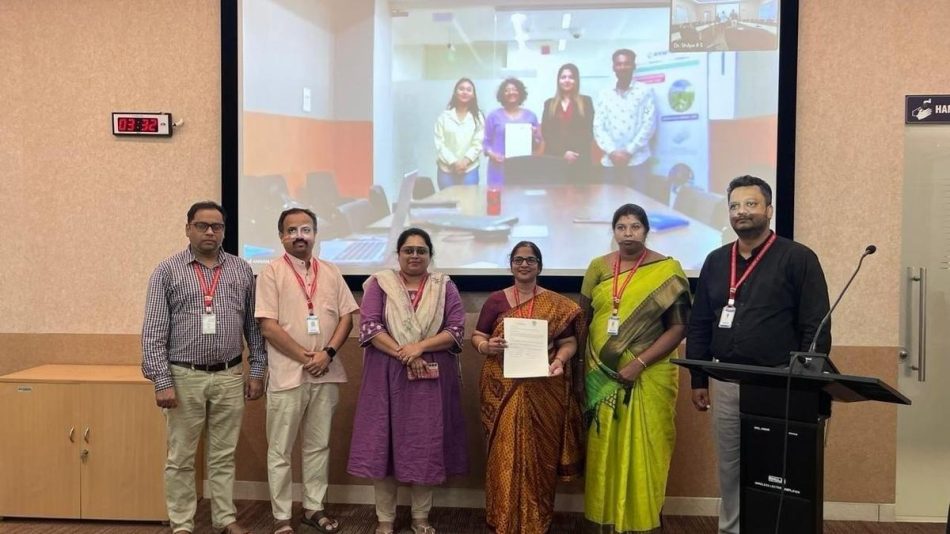
UWS and IIT Ropar to Set Up a Joint CoE for Smart Agriculture in India
In a significant development for agricultural innovation, the University of Western Sydney (UWS) and the Indian Institute of Technology (IIT) Ropar have signed a Memorandum of Understanding (MoU) to establish a Joint Center of Excellence (CoE) in Noida, India. This center aims to focus on smart agriculture, leveraging artificial intelligence (AI), automation, and climate-resilient farming techniques.
Formalization of the Partnership
The MoU was formalized in early December 2025 in the presence of Australia’s Education Minister, Mr. Jason Clare, and Prof. Rajeev Ahuja, Director of IIT Ropar. This collaboration marks a major milestone in the scientific partnership between India and Australia, bringing together the expertise of two globally respected institutions.
Aims and Objectives of the Joint Center
The Joint Center of Excellence will serve as a hub for cutting-edge agricultural research, fostering industry partnerships, and deploying farmer-focused technologies. The collaboration combines IIT Ropar’s deep agri-tech expertise with UWS’s recognized research ecosystem in environmental and agricultural sciences.
Key Focus Areas
- AI-powered soil and crop diagnostics
- Automation and robotics for farm operations
- Climate-adaptive farming models
- Digital twins for agriculture
- Sustainable water and nutrient management
- Next-generation agri-supply chain analytics
Educational and Research Opportunities
The center will also facilitate joint PhD programs, faculty exchanges, and industry-supported innovation challenges. By merging IIT Ropar’s engineering and AI leadership with UWS’s strengths in environmental and agricultural science, the center aims to:
- Enable data-driven decision-making for farmers
- Support precision agriculture at scale
- Strengthen food security through predictive analytics
- Create new agri-tech startups and rural innovation clusters
- Train the next generation of AI-enabled agricultural professionals
Statements from Key Figures
During the signing ceremony, Prof. Rajeev Ahuja expressed the transformative potential of this partnership, stating, “This partnership is not just an MoU – it is a commitment to building the world’s most advanced agricultural intelligence ecosystem. Together, we will empower Indian farmers with tools that are accurate, affordable, and accessible.”
Mr. Jason Clare, the Australian Education Minister, emphasized the shared vision of India and Australia for sustainable agriculture, saying, “This joint center will accelerate innovation, strengthen academic ties, and create real-world impact for millions of farmers.”
Importance of the Collaboration
The President of the University of Western Sydney remarked on the significance of this partnership, noting, “UWS has long been at the forefront of environmental and agricultural sciences. Partnering with IIT Ropar allows us to combine our global research strengths with India’s scale and diversity. This center will become a model for how nations can collaborate to secure the future of food.”
Future Implications
The establishment of this Joint Center of Excellence is expected to have far-reaching implications for the agricultural sector in India. By harnessing advanced technologies and fostering innovation, the center aims to address critical challenges faced by farmers, including climate change, resource management, and food security.
Potential Benefits for Farmers
Farmers stand to benefit significantly from the advancements and research conducted at the center. Some potential benefits include:
- Improved crop yields through precision agriculture techniques
- Access to real-time data for better decision-making
- Enhanced resilience to climate-related challenges
- Opportunities for collaboration with agri-tech startups
Conclusion
The collaboration between UWS and IIT Ropar represents a significant step forward in the integration of technology into agriculture. By focusing on smart agriculture, the Joint Center of Excellence aims to not only improve agricultural practices but also enhance the livelihoods of farmers across India. This initiative is a testament to the potential of international partnerships in addressing global challenges and fostering sustainable development.
Note: The information provided in this article is based on the latest developments as of December 2025.