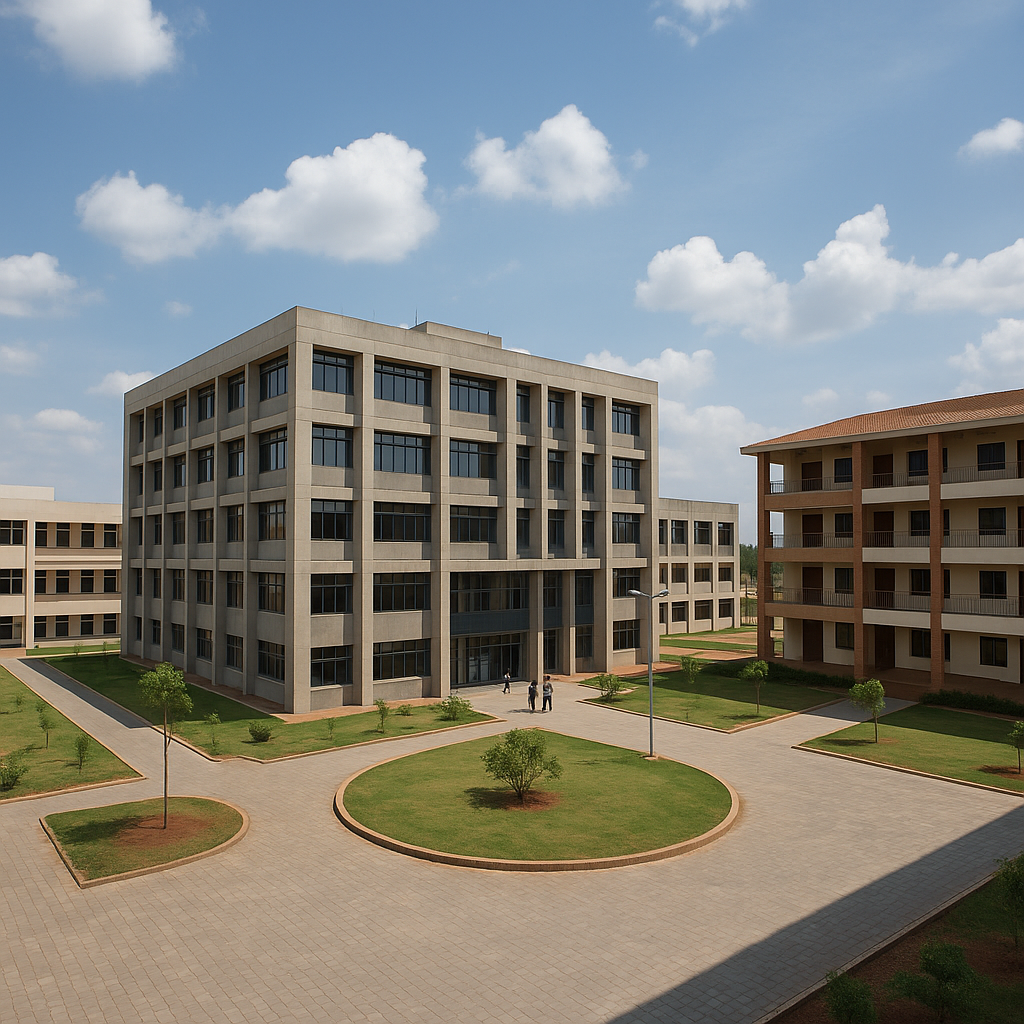
Week-long Math Training Programme Held at IIT-Dharwad
From January 26 to 31, 2026, the Indian Institute of Technology (IIT) Dharwad hosted a week-long math training programme titled “Initiation into Mathematics.” This initiative was a collaborative effort between IIT-Dharwad and the Mathematics Training and Talent Search (MTTS) Trust, a non-profit organization dedicated to enhancing mathematical education in India.
Overview of the Programme
The programme attracted 62 undergraduate students from 40 different institutions across Karnataka, as well as participants from neighboring states, including Goa and Maharashtra. This diverse representation underscores the programme’s significance in promoting mathematical education in the region.
Objectives of the Initiative
The primary aim of the “Initiation into Mathematics” programme was to inspire students to transcend rote memorization and engage in deeper critical thinking and logical reasoning. The MTTS Trust has been active for over 33 years, focusing on improving mathematical pedagogy and fostering a culture of inquiry among students.
Participants and Representation
Among the participants, many hailed from government colleges, ensuring that the programme reached a broad audience. This initiative is one of the first major efforts to elevate mathematical standards in the region, providing students with an opportunity to enhance their understanding of mathematics in a supportive environment.
Programme Structure
The week-long training included a series of lectures, workshops, and hands-on activities designed to engage students actively in the learning process. The curriculum was crafted to challenge students and encourage them to think critically about mathematical concepts.
Key Components of the Programme
- Lectures: Renowned mathematicians and educators delivered lectures on various mathematical topics, providing insights into advanced concepts.
- Workshops: Interactive workshops allowed students to collaborate and solve problems, fostering teamwork and communication skills.
- Hands-on Activities: Practical activities were designed to illustrate mathematical principles in real-world contexts, making learning more relatable.
Valedictory Ceremony
The programme concluded on January 31, 2026, with a valedictory ceremony where students shared their experiences and reflections on the week. This event provided an opportunity for participants to express their gratitude and highlight the impact of the training on their mathematical journey.
Insights from IIT-Dharwad
During the valedictory ceremony, IIT-Dharwad’s director, Venkappayya R. Desai, emphasized the contributions of Indian mathematicians throughout history and discussed the philosophy of teaching and learning mathematics. His remarks underscored the importance of nurturing a new generation of mathematicians who can contribute to the field and society.
Future Prospects
The success of the “Initiation into Mathematics” programme at IIT-Dharwad sets a precedent for future initiatives aimed at enhancing mathematical education in India. The collaboration between IIT-Dharwad and the MTTS Trust demonstrates a commitment to fostering a culture of learning and inquiry in mathematics.
Potential Areas for Expansion
- Increased Participation: Future programmes could expand to include more institutions and students from various backgrounds.
- Advanced Topics: Incorporating advanced mathematical topics and research opportunities could further engage students.
- Online Resources: Developing online materials and resources could make the programme accessible to a wider audience.
Conclusion
The week-long math training programme at IIT-Dharwad was a significant step towards improving mathematical education in the region. By fostering critical thinking and providing a platform for collaborative learning, the initiative has the potential to inspire a new generation of mathematicians. As educational institutions continue to prioritize innovative teaching methods, programmes like this will play a crucial role in shaping the future of mathematics in India.
Note: The information presented in this article is based on a report published by The Hindu on January 31, 2026.