3 Indian-Origin Techies Win Top AI Award In US
In a remarkable achievement, three Indian-origin researchers have been honored with the prestigious 2025 Outstanding Postdoctoral Performance Awards by Argonne National Laboratory. This award recognizes early career scientists who are making significant contributions to scientific knowledge and advancing national missions in energy and security.
The Awardees
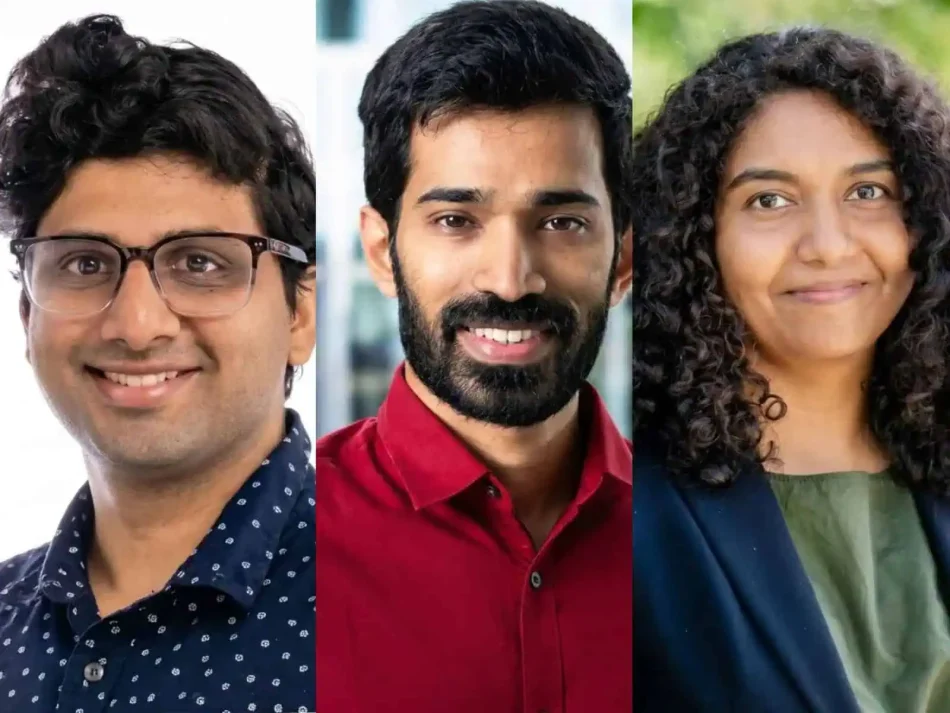
The awardees, Kiran Kumar Yalamanchi, FNU Shilpika, and Teja Chitty-Venkata, have demonstrated exceptional skill and innovation in the fields of artificial intelligence (AI), high-performance computing, and sustainability.
Kiran Kumar Yalamanchi
Kiran Kumar Yalamanchi’s research is centered around computational science, where he integrates traditional physics-based modeling with machine learning techniques. His work primarily focuses on fluid dynamics and energy applications. Yalamanchi has made significant contributions to the development of multimodal foundation models that analyze various types of data to predict behavior and design new materials. This innovative approach is crucial for advancing research in energy efficiency and material science.
Teja Chitty-Venkata
Teja Chitty-Venkata’s research aims to enhance the capabilities and efficiency of AI systems. He specializes in techniques such as pruning and quantization, which streamline neural networks without sacrificing performance. Chitty-Venkata has also developed open-source tools like LLM-Inference-Bench, designed to measure the efficiency of AI models running on high-performance systems. His work is vital for scaling AI technologies in a cost-effective manner, making them more accessible for various applications.
FNU Shilpika
FNU Shilpika’s focus lies in improving the transparency of complex algorithms. As an employee at Argonne’s Leadership Computing Facility, she has developed a ‘digital twin’ of Aurora, one of the world’s most powerful exascale supercomputers. This virtual replica mimics the real system, allowing engineers and scientists to monitor performance, predict failures, and optimize operations in real-time. Shilpika’s work is essential for maintaining the efficiency of supercomputers, which are becoming increasingly complex.
The Importance of Their Work
The contributions of these three researchers are not only significant within the realm of academia but also have far-reaching implications for various industries. Their research addresses some of the most pressing challenges in energy sustainability, computational efficiency, and the transparency of AI systems.
Advancements in Energy and Sustainability
As the world faces the challenges of climate change and energy sustainability, Yalamanchi’s work in fluid dynamics and energy applications is particularly relevant. By integrating machine learning with traditional modeling techniques, he is paving the way for more efficient energy solutions. This research could lead to innovations that reduce energy consumption and enhance the performance of renewable energy systems.
Enhancing AI Efficiency
Chitty-Venkata’s focus on optimizing AI systems is crucial as organizations increasingly rely on AI for decision-making and operational efficiency. His development of tools to measure the performance of AI models ensures that organizations can implement AI solutions that are not only effective but also cost-efficient. This is particularly important for startups and smaller enterprises that may have limited resources.
Transparency in Complex Algorithms
Shilpika’s work on creating a digital twin of a supercomputer addresses the growing need for transparency in AI and computational systems. As AI becomes more integrated into critical sectors such as healthcare, finance, and transportation, ensuring that these systems are transparent and reliable is paramount. Her contributions help build trust in AI technologies by providing insights into their operations and performance.
Conclusion
The recognition of Kiran Kumar Yalamanchi, FNU Shilpika, and Teja Chitty-Venkata with the 2025 Outstanding Postdoctoral Performance Awards highlights the significant impact of Indian-origin researchers in the field of technology and artificial intelligence. Their innovative approaches and dedication to advancing scientific knowledge not only contribute to their respective fields but also play a vital role in addressing global challenges. As they continue to push the boundaries of research and technology, their work will undoubtedly inspire future generations of scientists and engineers.
Note: This article is based on information available as of May 2026. For the latest updates on these researchers and their work, please refer to credible news sources and academic publications.