AI-Powered Human Body Replica Revolutionizes Disease Detection at Bhopal Conference
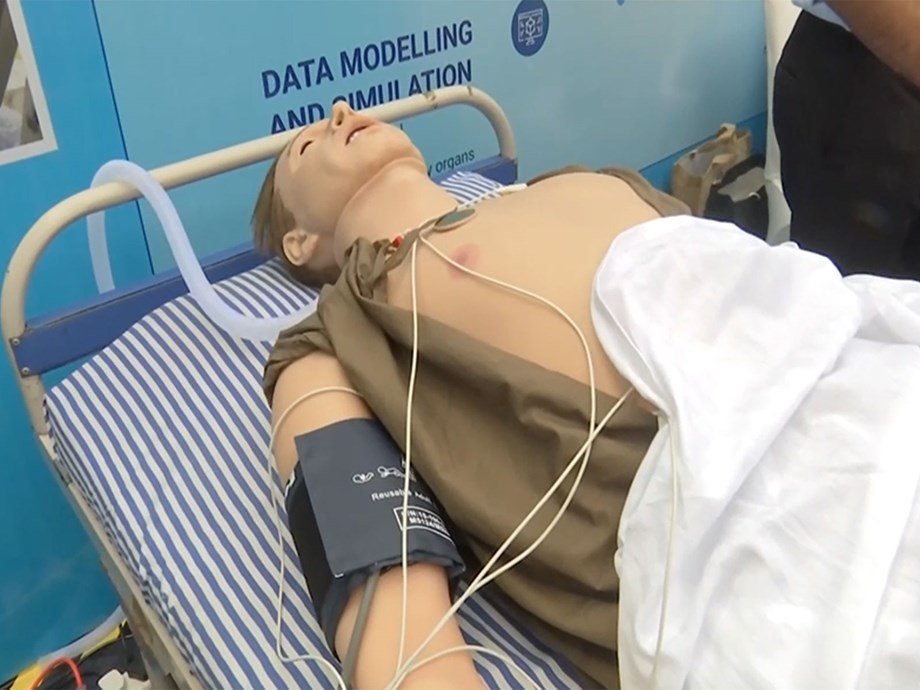
The Madhya Pradesh Regional AI Impact Conference 2026, held on January 15 in Bhopal, showcased a groundbreaking innovation in healthcare: an AI-powered human body replica developed by the Indian Institute of Technology (IIT) Indore. This remarkable model, which drew significant attention from technology experts and medical professionals, serves as a digital twin designed to identify disease patterns within the human body.
Overview of the AI-Powered Human Replica
The AI-driven human body replica, known as the Charak DT (Digital Twin) Platform, aims to enhance healthcare delivery by virtually simulating the impact of diseases on various organs. According to Vaibhav Jain from Drishti CPS at IIT Indore, this project is in alignment with the National Mission on Interdisciplinary Cyber-Physical Systems (NM-ICPS) and is supported by the Department of Science and Technology, Government of India.
Key Features of the Digital Twin
The human replica is designed to mimic basic human functions, such as breathing and other physiological processes. This capability allows medical researchers to conduct a variety of experiments that can lead to improved diagnostics and treatment options. The digital twin acts as a versatile tool for understanding how diseases affect the human body, thereby facilitating early disease detection.
Collaboration and Clinical Validation
The IIT Indore team is collaborating with several prestigious institutions, including AIIMS Bhopal, AIIMS Delhi, and AIIMS Raipur, to pursue clinical validation of the digital twin. This collaboration is crucial for ensuring that the technology can be effectively integrated into existing healthcare systems and practices.
Benefits of the AI-Powered Replica
- Early Disease Detection: The digital twin can help identify disease patterns at an early stage, improving patient outcomes.
- Enhanced Research Capabilities: Researchers can conduct experiments in a controlled environment, leading to more accurate data collection and analysis.
- Cost-Effective Solutions: By simulating various disease scenarios, healthcare providers can save on costs associated with traditional diagnostic methods.
- Interdisciplinary Approach: The project encourages collaboration between technology and healthcare sectors, fostering innovation.
The Future of Healthcare Technology
The introduction of AI-powered replicas like the one developed by IIT Indore marks a significant step forward in the field of healthcare technology. As the digital twin technology continues to evolve, it holds the potential to revolutionize how diseases are diagnosed and treated. The integration of artificial intelligence in healthcare not only enhances the accuracy of diagnostics but also supports personalized medicine approaches.
Conclusion
The AI-powered human body replica presented at the Bhopal conference is a testament to the innovative spirit of Indian researchers and their commitment to improving healthcare outcomes. As this technology undergoes further development and validation, it is poised to make a lasting impact on the medical field, paving the way for more effective disease detection and treatment methodologies.
Note: The information presented in this article is based on the latest updates from the Madhya Pradesh Regional AI Impact Conference 2026 and other reliable sources.