Amazon, IIT-Roorkee to transform farm waste into recyclable packaging
In a groundbreaking initiative, Amazon has partnered with the Indian Institute of Technology (IIT) Roorkee to develop innovative packaging solutions derived from agricultural waste. This collaboration aims to address significant environmental challenges, including plastic pollution and air quality issues, while also providing economic benefits to farmers.
The Need for Sustainable Packaging
India generates approximately 500 million tons of agricultural waste annually, a substantial amount that often goes unused. Traditional packaging methods rely heavily on virgin materials, contributing to deforestation and increased carbon emissions. The partnership between Amazon and IIT Roorkee seeks to convert farm byproducts, such as wheat straw and sugarcane residue, into durable and recyclable packaging materials.
Research and Development Timeline
The collaborative project will unfold over a 15-month research period. During this time, the team will focus on processing agricultural residues into high-quality paper mailers. The resulting materials are designed to be lightweight yet robust, offering a viable alternative to conventional packaging options.
Addressing Stubble Burning
One of the critical environmental issues in India is the practice of stubble burning, where farmers set fire to leftover crop residue after harvest. This practice significantly contributes to air pollution, particularly in the Delhi-NCR region during winter months. By converting agricultural waste into packaging, this initiative not only reduces plastic consumption but also mitigates the harmful effects of stubble burning.
How the Process Works
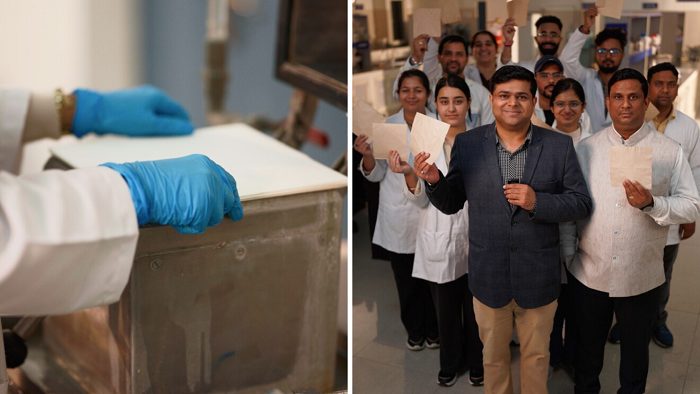
The transformation of farm residue into packaging begins at the INNOPAP (Innovations in Paper and Packaging) lab at IIT Roorkee’s Department of Paper and Packaging Technology. The process involves several key steps:
- Delivery of Raw Materials: Wheat straw and bagasse, typically discarded after harvest, are delivered to the lab.
- Pulping: The crop residue is processed in an autoclave digester, breaking it down into pulp. This step is crucial for converting agricultural waste into usable fiber.
- Washing and Screening: The pulp is thoroughly washed and screened to remove impurities, ensuring consistent quality.
- Pressing and Drying: The refined pulp is pressed and dried to form paper sheets that meet Amazon’s durability and recyclability standards.
The end product is fully functional, recyclable mailers ready for use in customer shipments.
Collaboration Goals
The partnership aims to achieve several goals:
- Conduct laboratory-scale research and testing over 15 months.
- Transition to industrial trials and process validation if performance benchmarks are met.
- Move towards commercial-scale production by mid to late 2027.
Statements from Key Figures
Kamal Kishore Pant, director of IIT Roorkee, emphasized the importance of sustainability, stating, “This partnership represents meaningful progress toward India’s circular economy ambitions.” He highlighted the dual benefits of tackling stubble burning and reducing reliance on virgin materials.
Abhinav Singh, vice-president of operations at Amazon India, added, “Redirecting agricultural waste into packaging applications supports a circular economy while decreasing dependence on traditional materials.”
Amazon’s Commitment to Sustainability
Amazon has made significant strides in reducing packaging waste. The company reports that more than half of customer orders in India are shipped using either original manufacturer packaging or reduced packaging materials. Since 2019, Amazon India has eliminated all single-use plastics from its fulfillment centers.
Furthermore, through The Climate Pledge, Amazon aims to achieve net-zero carbon emissions across its operations by 2040. The company is actively investing in renewable energy and sustainable packaging solutions to meet this ambitious target.
Conclusion
The collaboration between Amazon and IIT Roorkee marks a significant step towards innovative and sustainable packaging solutions. By transforming agricultural waste into recyclable materials, this initiative not only addresses pressing environmental issues but also supports farmers and contributes to a circular economy. As the project progresses, it holds the potential to redefine packaging standards and promote sustainability across the industry.
Note: This article is based on information available as of February 2026 and may be subject to updates as the project develops.