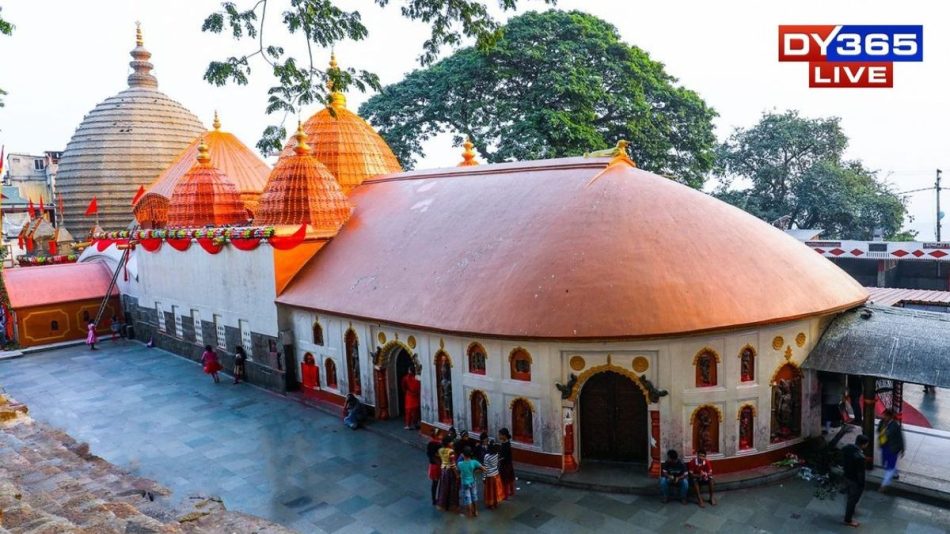
Assam: IIT-Guwahati Endorses Strict Depth Limits for Kamakhya Access Corridor Project to Protect Groundwater in Nilachal Hills
The Indian Institute of Technology Guwahati (IIT-G) has recently advocated for stringent compliance with depth-related construction safeguards in the ongoing Maa Kamakhya Access Corridor Project located in the Nilachal Hills of Guwahati, Assam. This initiative aims to enhance access and facilities for pilgrims visiting the revered Kamakhya Temple complex.
Background of the Project
The Maa Kamakhya Access Corridor Project is a significant undertaking with an estimated budget of Rs 500 crores. It is designed to improve the infrastructure and accessibility for the thousands of pilgrims who visit the Kamakhya Temple, one of the most important religious sites in India. However, the project has raised concerns regarding its potential impact on the local hydro-geological system, particularly groundwater pathways.
Concerns Raised by IIT-Guwahati
IIT-G has expressed concerns that deviating from the recommended construction guidelines could disrupt critical fracture-controlled groundwater pathways. These pathways are essential for maintaining the area’s delicate hydro-geological balance. The recommendations from IIT-G follow a comprehensive geophysical and hydrological assessment conducted by the National Institute of Hydrology (NIH), Roorkee, which was commissioned by the Assam government in response to two public interest litigations filed in the Gauhati High Court.
Geophysical and Hydrological Assessment
The NIH study aimed to evaluate the potential subsurface impacts of the construction project. The findings highlighted the presence of interconnected fractures at various depths along the corridor stretch from the Maa Kamakhya Temple to the Chinnamasta Temple. Key findings of the assessment include:
- Fractures were identified at depths ranging from 1.9 metres to 10.5 metres.
- Within the Siddheshwar Temple premises, fractures were detected between 3.9 metres and 8.1 metres.
- In the playground area, a subsurface soil-fill layer of approximately 3.2 to 3.5 metres thick was identified, consisting of coarse sand, pebbles, and clay.
- Fractures in the playground zone appeared at depths of 6.4 metres to 7.6 metres.
Recommendations for Depth Limits
To protect the natural groundwater flow, IIT-G has made specific recommendations regarding foundation depths for various sections of the project:
- Foundation depths between the Maa Kamakhya Temple and Chinnamasta Temple should be restricted to no more than 1.9 metres.
- Construction in front of the Siddheshwar Temple should limit foundations to 3.9 metres or the depth of the nearest fracture, whichever is shallower.
- In the playground area, foundation depths should be capped at a maximum of 6.4 metres to prevent disturbance to groundwater pathways.
Importance of the Recommendations
The IIT-G researchers emphasized that these recommendations are crucial for preserving the integrity of the natural hydro-geological regime while allowing for the responsible implementation of the development project. By adhering to these guidelines, the project can minimize its environmental impact and ensure the sustainability of the groundwater resources in the Nilachal Hills.
Response from Project Consultants
In line with the expert directives from IIT-G, the project’s consultants have revised the structural drawings to incorporate the specified depth thresholds across all four construction blocks. This proactive approach demonstrates a commitment to environmental stewardship while facilitating the development of essential infrastructure for pilgrims.
Public Works Department’s Position
The Public Works Department (PWD) had previously informed the Gauhati High Court that most of the pilgrim amenities and utility structures are strategically placed over the footprints of pre-existing houses and buildings. This strategy is designed to leverage long-compacted land, thereby reducing fresh geological disturbance and minimizing the project’s impact on the surrounding environment.
Conclusion
The endorsement of strict depth limits for the Kamakhya Access Corridor Project by IIT-Guwahati highlights the importance of balancing development with environmental conservation. As the project progresses, adherence to these recommendations will be vital in safeguarding the groundwater resources of the Nilachal Hills, ensuring that the natural hydro-geological system remains intact for future generations of pilgrims and local communities.
Note: The information presented in this article is based on the latest available data and assessments as of October 2023.