Backed by the Government of India, IIT Indore Builds AI-Powered Human Digital Twin That Breathes and Blinks to Detect Diseases
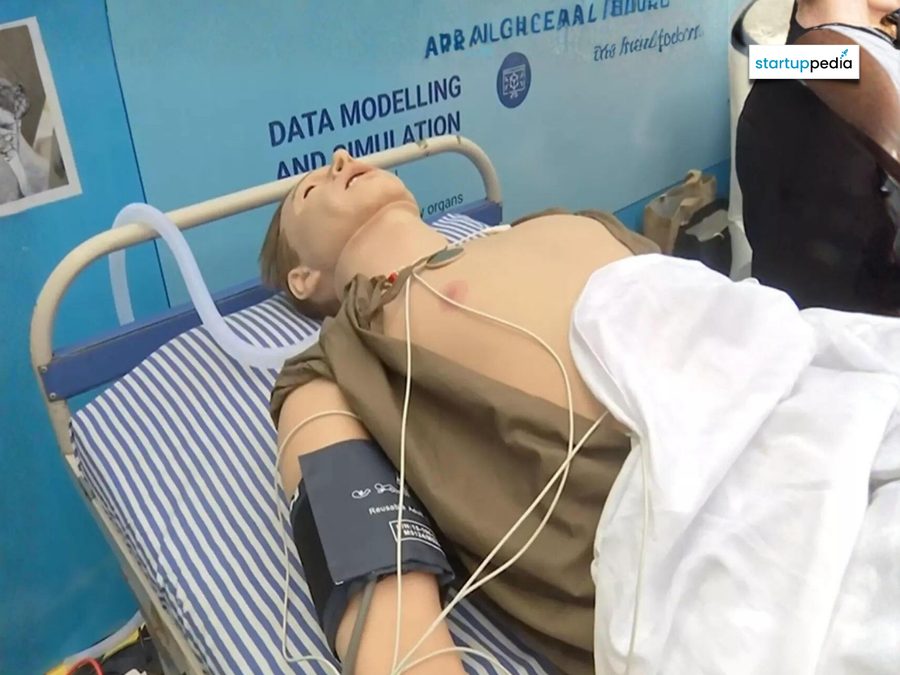
In a groundbreaking achievement, the Indian Institute of Technology (IIT) Indore has unveiled an AI-powered human digital twin known as Charak DT. This innovative technology aims to simulate various biological functions and assist in the prevention and diagnosis of diseases, marking a significant advancement in healthcare research in India.
Overview of the AI-Powered Digital Twin
The digital twin developed by IIT Indore is designed to replicate essential bodily functions, such as breathing and blinking. This capability allows healthcare professionals to model health situations in a simulated environment and study disease behavior without the need for direct interaction with actual patients. The project was showcased at the Madhya Pradesh Regional AI Impact Conference 2026 held on January 15 in Bhopal.
Collaboration and Development
The Charak DT platform is a product of collaboration between Drishti CPS, a technology innovation hub at IIT Indore, and the Department of Science and Technology (DST), which operates under the Government of India’s National Mission on Interdisciplinary Cyber-Physical Systems (NM-ICPS). This initiative aims to bridge the gap between technological advancements and healthcare delivery through the application of artificial intelligence.
Objectives of the Charak DT Platform
The primary objectives of the Charak DT platform include:
- Providing preventive diagnosis of diseases.
- Enabling medical research and experimentation in a risk-free environment.
- Facilitating the development of healthcare technologies.
Functionality of the Digital Twin
According to Vaibhav Jain from Drishti CPS, the digital twin operates by utilizing data-driven models that are trained on various human parameters. These parameters help in detecting disease thresholds and identifying organ-level patterns. Jain explains, “The digital twin model of a human implements an AI model that is trained on various human parameters that lead to some kind of diseases. Whenever these parameters reach a certain threshold, we provide diagnosis using different technologies.”
Current Developments and Future Plans
Currently, the focus is on developing a digital twin of the lungs, with plans to expand this technology to encompass the cardiovascular system and other vital organs. This expansion aims to enhance the platform’s capabilities and its applicability in diverse healthcare scenarios.
Clinical Validation and Collaboration with AIIMS
To ensure the clinical relevance and reliability of the Charak DT platform, IIT Indore is collaborating with several All India Institute of Medical Sciences (AIIMS) institutions, including AIIMS Bhopal, AIIMS Delhi, and AIIMS Raipur. These partnerships are crucial for assessing the platform’s applicability across various healthcare settings and for strengthening its role as a complementary tool for diagnostics and clinical decision-making.
Implications for Healthcare
The introduction of AI-powered digital twins in healthcare has the potential to revolutionize the way diseases are diagnosed and treated. By simulating human biological functions, healthcare professionals can conduct experiments and trials in a controlled environment, leading to better preventive measures and treatment outcomes.
Conclusion
The development of the AI-powered human digital twin by IIT Indore represents a significant step forward in the integration of technology and healthcare. With its ability to simulate biological functions and assist in disease diagnosis, this innovative platform holds promise for improving healthcare delivery and advancing medical research in India.
Note: The information presented in this article is based on the latest developments as of January 2026 and may be subject to change as further research and validation are conducted.