IIT Indore Develops AI-Powered Human Digital Twin
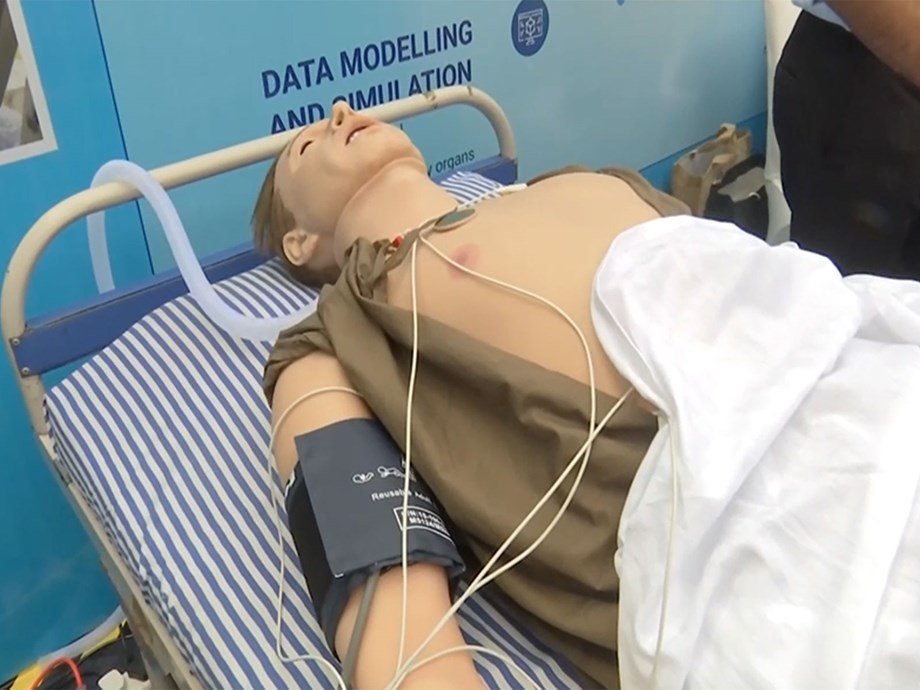
Researchers at the Indian Institute of Technology (IIT) Indore have made a significant breakthrough in the field of healthcare technology by developing an artificial intelligence (AI) powered digital twin that closely mimics human physiology. This innovative tool is designed to study disease progression and support early diagnosis, marking a pivotal advancement in medical research and patient care.
Showcasing Innovation at the AI Impact Conference
The team at IIT Indore presented their groundbreaking digital twin technology at the Madhya Pradesh Regional AI Impact Conference, held in Bhopal on January 15, 2026. This conference served as a platform for researchers and innovators to share advancements in AI and its applications across various sectors, including healthcare.
Understanding the Digital Twin Concept
At its core, the AI model functions as a digital twin of the human body, capable of simulating selected physiological activities. This allows for an in-depth analysis of how diseases affect different organs. By replicating fundamental human responses such as breathing and blinking, the system provides researchers and clinicians with the ability to observe disease behavior within a controlled virtual environment.
Benefits of the Digital Twin Technology
- Enhanced Disease Analysis: The digital twin allows for a more nuanced understanding of disease dynamics, which can lead to improved preventive care strategies.
- Support for Early Diagnosis: By simulating disease progression, the technology aids in identifying health issues at earlier stages.
- Improved Treatment Planning: Clinicians can use the insights gained from the digital twin to tailor treatment plans to individual patients.
Bridging Technology and Healthcare
This project is a collaborative effort supported by the Department of Science and Technology (DST) under a national interdisciplinary research mission. The aim is to bridge advanced technology with clinical medicine, creating a synergy that enhances both research capabilities and healthcare delivery.
Advanced Modelling and AI Simulations
The digital twin employs sophisticated modelling techniques and AI-driven simulations to offer deeper insights into human biology and the complexities of disease dynamics. This level of understanding is often challenging to achieve through conventional research methods.
Current Focus on Lung Simulations
As of now, the research team is concentrating on lung simulations to gain a more precise understanding of respiratory disease mechanisms. This focus is critical, given the increasing prevalence of respiratory illnesses globally.
Future Expansion Plans
The team plans to gradually integrate additional organ systems, including cardiovascular and neurological functions, thereby creating a more comprehensive and interconnected human digital model. This expansion will enhance the digital twin’s applicability across a wider range of medical conditions.
Clinical Validation with AIIMS
To ensure the reliability and translational potential of the digital twin, clinical validation is currently underway in collaboration with multiple All India Institute of Medical Sciences (AIIMS) centers. These partnerships are crucial for aligning the virtual simulations with real-world clinical data, thus strengthening the model’s credibility.
Advancing Personalised and Predictive Healthcare
Once fully developed, the AI-powered digital twin is expected to revolutionize how medical professionals understand complex disease mechanisms. It will enable virtual testing of therapeutic interventions and support more personalized healthcare approaches. This initiative represents a significant step in India’s growing focus on AI-driven healthcare innovation.
Impact on Diagnostic Accuracy and Patient Outcomes
The introduction of digital twin technology is poised to enhance diagnostic accuracy significantly. By providing healthcare professionals with a powerful tool for simulation and analysis, patient outcomes are likely to improve, as treatments can be more effectively tailored to individual needs.
Conclusion
The development of an AI-powered human digital twin at IIT Indore marks a transformative moment in the intersection of technology and healthcare. As this technology continues to evolve, it holds the potential to redefine how diseases are studied, diagnosed, and treated, ultimately leading to a healthier future for patients worldwide.
Note: The information provided in this article is based on the latest developments as of January 2026 and may be subject to further advancements in the field.