Building Upwards: IIT Delhi Plans to Rebuild Entire Campus by 2035
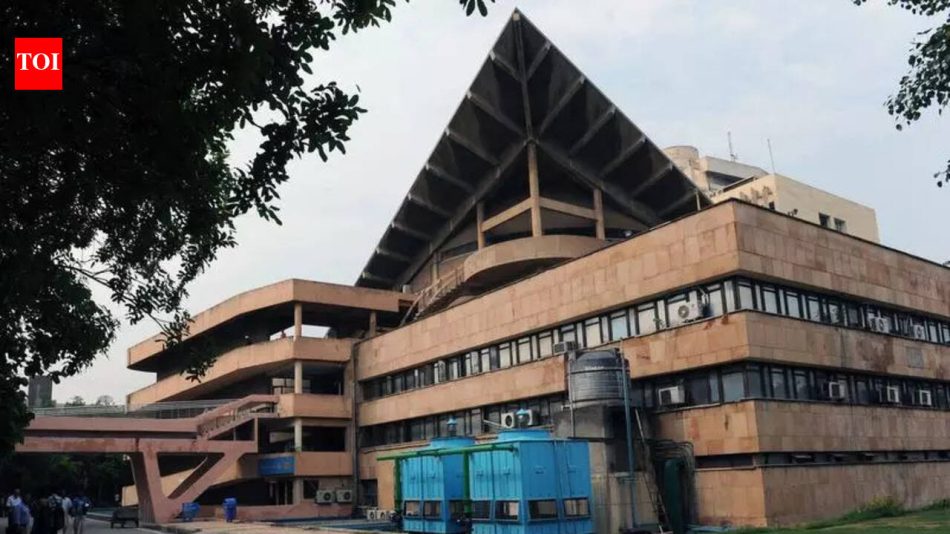
New Delhi: The Indian Institute of Technology (IIT) Delhi is embarking on an ambitious project to redevelop its entire campus by 2035. This initiative aims to enhance the academic, residential, and research infrastructure while preserving the existing footprint and green cover of the campus.
Phased Redevelopment Strategy
The institute has developed a comprehensive plan that outlines a phased redevelopment strategy over the next 10 to 15 years. The blueprint, which is expected to be finalized by May, marks a shift from incremental construction to a unified campus-wide vision. This vision integrates hostels, academic blocks, and residential housing for faculty and staff, according to IIT Delhi’s director, Rangan Banerjee.
Transitioning and Capacity Building
Banerjee emphasized the importance of careful planning during the transition phases. He stated, “In about 10 to 15 years, the entire campus will essentially be rebuilt. But we have to carefully plan transitions, create capacity, shift people, build, and then move on to the next phase.”
Building Vertically: Addressing Space Constraints
Located in the heart of South Delhi at Hauz Khas, the campus faces significant space constraints. To tackle this challenge, the institute plans to build vertically within its current boundaries. Revised height regulations are anticipated to permit residential buildings to reach heights of 38 to 42 meters, effectively allowing for nearly double the height of existing hostels. This approach aims to significantly increase capacity without expanding the campus footprint or cutting down trees.
New High-Rise Hostels
As part of the redevelopment, two new high-rise hostels—one for men and another for women—are already in the pipeline. These hostels are expected to add approximately 4,000 beds to the campus. Once these new facilities are operational, the institute plans to begin demolishing older hostels that date back to the 1960s and 1970s, replacing them with modern structures that meet contemporary standards.
A Long-Term Perspective
Banerjee pointed out the limitations of a short-term construction approach. “Usually, we approach projects one at a time. We identify a shortage, plan to build over the next few years, figure out funding, and then construct. The problem with such a short-term approach is that our infrastructure never really keeps pace with our aspirations,” he noted. This realization led to the decision to adopt a long-term perspective in planning the redevelopment.
Environmental Considerations
The redevelopment plan has been carefully crafted to ensure that no trees are cut down. The current strategy focuses on maximizing construction within the existing footprint of the campus while adhering to environmental regulations. Banerjee stated, “We reviewed the original master plan, the zoning, and available areas while ensuring that no trees are cut. Our goal is that 10-15 years from now, with the projected number of faculty and students, the campus will have the necessary space to support our growth.”
Funding the Redevelopment
The estimated cost of the redevelopment is projected to be between Rs 8,000 and 9,000 crore over the next decade. The funding model is expected to be a balanced mix of institutional resources, alumni contributions, and support from government or industry. Unlike traditional endowments, alumni funding is likely to follow a “spend-down” approach, meaning donations will be directly deployed for construction, particularly for rebuilding older hostels.
Expansion Beyond the Main Campus
In addition to the main campus redevelopment, IIT Delhi is also expanding its residential capacity in the nearby RK Puram area. A two-acre plot is being developed to provide 140-150 flats for international students, visiting faculty, and staff, with completion expected in two to three years. Furthermore, plans are advancing for the Sonipat campus, where development is proposed to begin on 10 acres, with an additional 40 acres earmarked for future expansion.
Collaborative Planning Approach
The 2035 roadmap is being shaped through a combination of top-down planning and bottom-up engagement with faculty, staff, and students. Banerjee emphasized that the redevelopment is not solely about buildings; it is about collaboratively deciding what IIT Delhi should become and designing the infrastructure to support that vision.
Conclusion
Once finalized, the comprehensive blueprint for the campus redevelopment will be presented to stakeholders, positioning this initiative as a foundational step towards sustaining IIT Delhi’s academic and research ambitions for decades to come.
Note: This article is based on information available as of January 27, 2026, and may be subject to change as the redevelopment project progresses.