Burger Singh Expands Compact QSR Model to IIT Kanpur
On November 13, 2025, Burger Singh, a prominent homegrown quick service restaurant (QSR) chain, announced the opening of its latest outlet at the Indian Institute of Technology (IIT) Kanpur. This expansion marks a significant step in the brand’s strategy to establish a presence in high-footfall institutional locations across India.
Focus on Youth-Centric Spaces
The new outlet at IIT Kanpur reflects Burger Singh’s commitment to creating accessible, youth-centric, and community-driven spaces. These locations are designed to foster faster growth and meaningful consumer engagement. The company’s expansion strategy emphasizes formats that are particularly suited for universities, hospitals, metro stations, and airports—areas known for their consistent foot traffic and potential for quick scalability.
Compact and High-Engagement Outlets
Burger Singh’s compact, high-engagement outlets offer a flexible approach to strengthening its national presence. The design of these stores is tailored to provide a streamlined dining experience that caters to high-speed environments, ensuring that customers can enjoy their meals quickly and efficiently.
Entrepreneurial Spirit
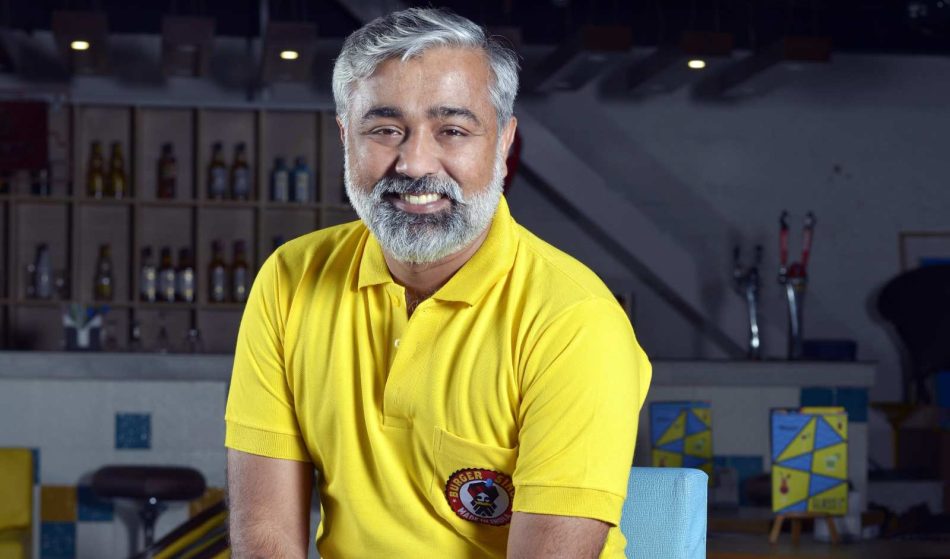
According to Kabir Jeet Singh, the Founder and CEO of Burger Singh, the brand was built on the principle that entrepreneurship in India should not be limited by capital. The low-capital expenditure (capex) model allows first-time business owners to operate profitable QSR outlets in high-demand zones like campuses and transit spaces. Singh stated, “IIT Kanpur represents that spirit perfectly, with young energy, ambition, and the drive to build something of their own.”
Current Operations and Franchise Model
Currently, Burger Singh operates over 180 outlets across more than 80 cities in India. The company is scaling its operations through a co-investment franchise model, which allows local entrepreneurs to invest in the brand. The investment for these compact store formats starts at approximately Rs 24–30 lakh, depending on the location and size of the store. This model empowers franchisees with faster breakeven timelines, operational support, and profitability across various types of outlets.
Minimizing Location Risk
Bhargav PV, Chief of Staff at Burger Singh, highlighted that the kiosk and compact formats are designed to minimize location risk. These outlets are effective in high-footfall zones, from educational campuses to metro stations, without the heavy overhead costs associated with traditional QSR spaces. This flexibility allows the brand to test, scale, or relocate quickly while maintaining strong unit-level profitability, which has been crucial for its rapid and sustainable expansion.
Broader Trends in the Indian QSR Industry
Burger Singh’s growth strategy is reflective of broader trends within India’s quick service restaurant industry. The market is increasingly viewing agile, low-cost formats and strategic site selection as essential for long-term success. By focusing on youth-centric and transit-heavy markets, Burger Singh is solidifying its position as a scalable, homegrown QSR network that prioritizes operational sustainability and inclusive entrepreneurship.
Conclusion
As the Indian QSR market continues to evolve, Burger Singh’s expansion at IIT Kanpur represents a significant advancement in its mission to increase access, foster local enterprise, and grow its national presence through compact, profitable, and adaptive retail formats. The brand’s focus on community engagement and support for local entrepreneurs is set to redefine the dining experience in high-traffic areas across the country.
Note: This article is based on information available as of November 2025 and may be subject to change as Burger Singh continues its expansion efforts.