C-DAC, IIT Madras And Lucas TVS Develop Indigenous EV Integrated Drive System
Chennai, March 3, 2026 – The Centre for Development of Advanced Computing (C-DAC), in collaboration with the Indian Institute of Technology Madras and Lucas TVS, has successfully developed an indigenous 30 kW Wide Band Gap (WBG)-based Integrated Drive System (IDS) tailored for electric vehicle (EV) applications. This initiative is part of the National Mission on Power Electronics Technology (NaMPET).
Significance of the Development
According to the Ministry of Electronics and Information Technology (MeitY), the large-scale adoption of this technology is expected to significantly strengthen India’s EV supply chain. It will also create new opportunities for micro, small, and medium enterprises (MSMEs) involved in power electronics manufacturing, thermal systems, and control hardware.
Launch Event
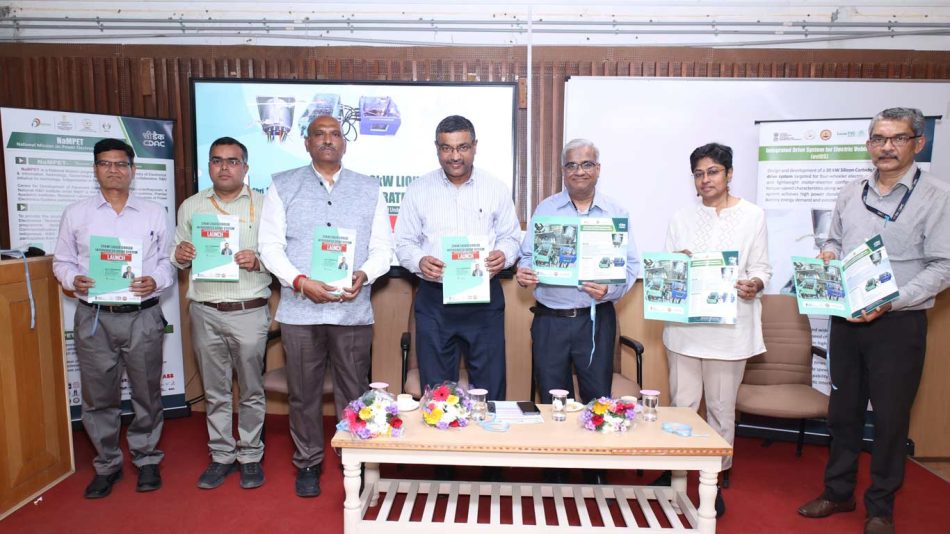
The IDS technology was officially launched by S. Krishnan, Secretary of MeitY, at IIT Madras on Monday. During the launch, Krishnan emphasized that this development aligns with Prime Minister Narendra Modi’s vision of ‘Make in India, Make for the World’. He articulated that the initiative supports the goal of achieving self-reliance in electric mobility and strategic electronics.
Transition from Importing to Developing Technology
Krishnan highlighted that India is transitioning from being a technology-importing nation to becoming a technology-developing and exporting nation. This shift is being reinforced through collaborative innovation among research and development institutions, academia, and industry.
“Such design-led innovation in India will help create strong domestic intellectual property, accelerate the start-up ecosystem, and strengthen high-value manufacturing in the EV sector,” he added.
Focus on Indigenous Power Electronics
The newly developed 30 kW power class is particularly suited for India’s expanding electric passenger vehicle segment, which includes compact cars and fleet mobility platforms. Currently, a significant portion of high-performance EV powertrain systems and semiconductor-based drive components are imported into the country.
MeitY stated that the indigenous development of integrated drive systems will help reduce import dependence, lower costs through localization, and support scalable manufacturing in alignment with national initiatives such as the Production-Linked Incentive (PLI) scheme.
Technical Specifications of the Integrated Drive System
The Integrated Drive System integrates the electric motor and inverter into a single compact unit, replacing the conventional separate motor-drive configuration. This innovative design leads to several advantages:
- Compactness: The integration reduces the overall size and weight of the powertrain.
- Efficiency: Enhanced performance through optimized energy conversion.
- Cost-Effectiveness: Reduced manufacturing and operational costs due to fewer components.
The system has been designed, fabricated, and validated in partnership with industry stakeholders and is now ready for commercialization.
Implications for MSMEs
The development of the IDS presents a significant opportunity for MSMEs in India. By fostering local manufacturing capabilities, the initiative aims to:
- Encourage innovation in power electronics.
- Enhance the competitiveness of Indian companies in the global market.
- Create job opportunities in the burgeoning EV sector.
Furthermore, the emphasis on indigenous technology is expected to stimulate research and development efforts within the country, leading to advancements in related fields.
Future Prospects
As India continues to push towards a greener future and aims to reduce its carbon footprint, the development of indigenous technologies like the Integrated Drive System is crucial. The government’s focus on electric vehicles is expected to drive demand for such innovations, paving the way for a sustainable transportation ecosystem.
In addition, the collaboration between C-DAC, IIT Madras, and Lucas TVS exemplifies the importance of partnerships between academic institutions and industry in fostering technological advancements.
Conclusion
The successful development of the indigenous 30 kW Integrated Drive System marks a significant milestone in India’s journey towards self-reliance in electric mobility. With the potential to reduce import dependence and promote local manufacturing, this initiative not only supports the national vision of ‘Make in India’ but also opens up new avenues for innovation and entrepreneurship in the EV sector.
Note: The information provided in this article is based on the latest updates from the Ministry of Electronics and Information Technology and other relevant sources as of March 2026.