China’s China’s $1 Billion Robot Army Is Replacing Human Maintenance Crews with 8,500 AI Robots Billion Robot Army Is Replacing Human Maintenance Crews with 8,500 AI Robots
In a groundbreaking initiative, China has announced a $1 billion investment to deploy a robotic workforce of 8,500 AI robots across its power grid infrastructure. This ambitious project, spearheaded by the State Grid Corporation of China, aims to revolutionize maintenance operations in 26 provincial regions by the year 2026.
The Robotic Workforce Breakdown
The deployment of these robots is set to include:
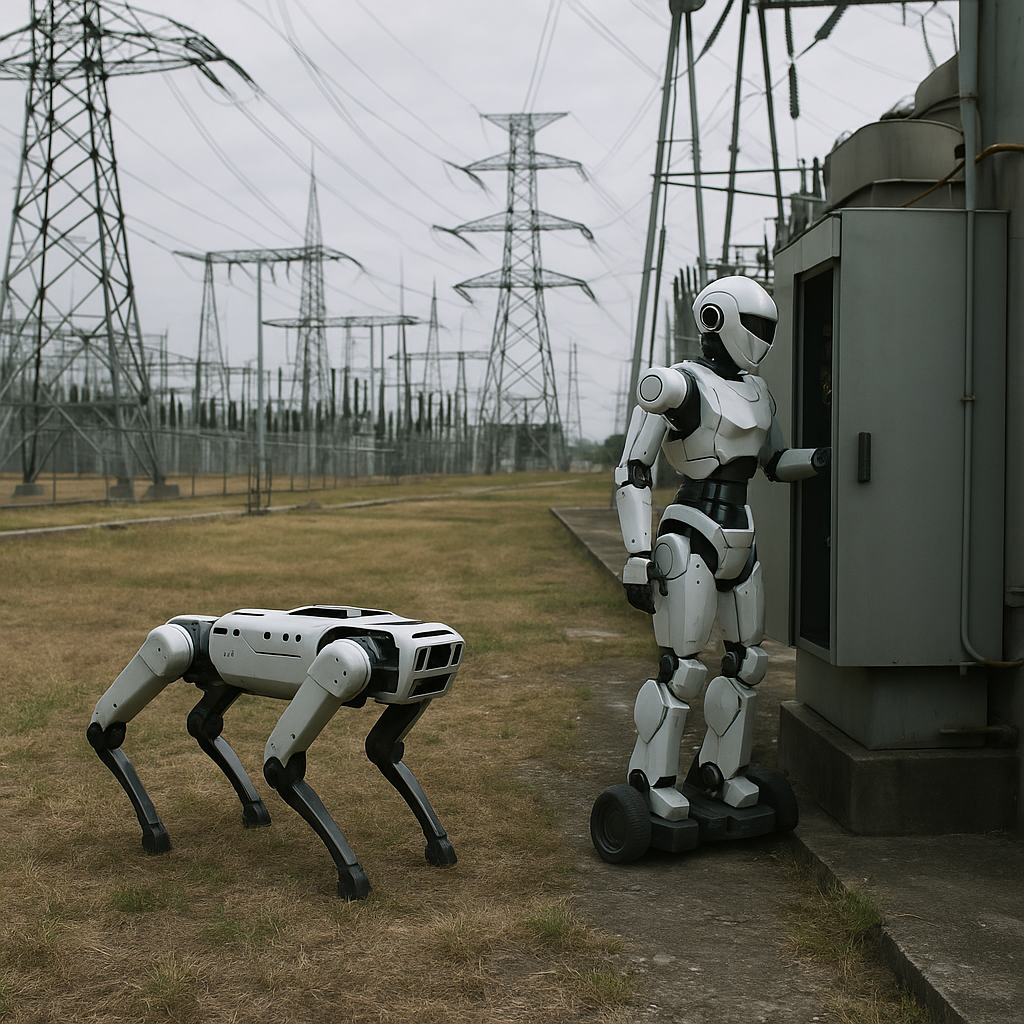
- 5,000 quadruped “robot dogs”: These robots will patrol substations and mountainous transmission lines, ensuring safety and operational efficiency.
- 500 humanoid robots: Tasked with handling ultra-high-voltage maintenance, these robots will perform complex repairs that require precision and reliability.
- 3,000 dual-arm wheeled units: Designed for coordinated repairs, these robots will assist in heavy lifting and intricate tasks.
These robots are not merely prototypes; they have already been tested and deployed in various scenarios. They are capable of opening control boxes, detecting electrical leaks, and transporting loads of up to 100 kilograms.
Training and Development
According to Li Duanjiao, the head of the robotics laboratory, the training program for these robots focuses on six specific scenarios and 15 specialized skills. Engineers employ a method of mimicry in controlled environments to teach robots how to perform their tasks effectively. The initial stages of deployment have already begun, with robots being tested since the previous year.
Domestic Suppliers and Market Demand
China’s domestic robotics industry is rapidly scaling to meet the demands of this project. Companies such as Unitree Robotics, Deep Robotics, AgiBot, UBTech Robotics, and Fourier Intelligence are working diligently to supply the necessary technology. The current demand resembles the fervor seen during major smartphone launches, indicating a significant shift in the market.
Global Implications of the Deployment
The implications of this robotic deployment extend beyond China’s borders. While the United States grapples with an aging power grid that requires extensive renovation, China is betting on robotic maintenance to prolong the lifespan of its infrastructure. Furthermore, China is already exporting its substation-inspecting robot dogs to countries like Chile, testing the global appetite for AI-powered solutions in energy management.
A Strategic Move in the Global AI Race
This investment in robotics signals more than just an upgrade in infrastructure; it represents a strategic maneuver in the global race for AI dominance. China aims to produce 2.1 million embodied AI units by 2030, and the power grid serves as an ideal testing ground for large-scale autonomous operations. If robots can safely operate on live electrical systems in remote locations, they can likely handle a wide range of industrial tasks.
Financial Overview of the Initiative
The total investment in this robotic initiative, including contributions from China Southern Power Grid, is projected to exceed $1.46 billion by 2026. For consumers, this could translate to more reliable power and potentially lower long-term energy costs, provided the technology meets its ambitious promises.
Concerns for Global Competitors
For global competitors, particularly those struggling with grid modernization, China’s leap into critical infrastructure automation poses a significant challenge. The deployment of AI robots in maintenance roles could reshape how nations manage their essential systems, potentially leading to a competitive advantage for China in the energy sector.
Conclusion
China’s ambitious plan to replace human maintenance crews with a robotic army represents a significant shift in how infrastructure is managed. As the world watches this development unfold, the implications for energy reliability, cost, and global competitiveness will be closely monitored. The success of this initiative could pave the way for broader applications of robotics in various sectors, marking a new era in automation and artificial intelligence.
Note: The information presented in this article is based on developments up to October 2023 and may be subject to change as new data emerges.