
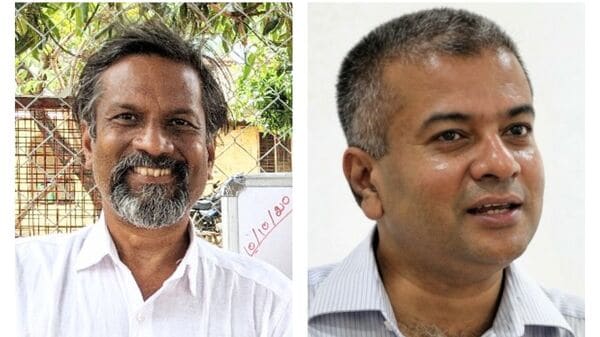
'IIT topper, UPSC rank 1 — 32 transfers in 34 years': Sridhar Vembu flags IAS officer’s unusual career
In a recent social media post, Sridhar Vembu, co-founder of Zoho Corporation, has highlighted the remarkable yet tumultuous career of Raju Narayana Swamy, a senior Indian Administrative Service (IAS) officer. Swamy, who is also an IIT Madras alumnus, has garnered attention for his exceptional academic achievements and his challenging journey through public service, marked by a staggering 32 transfers in 34 years.
From IIT Topper to UPSC Rank 1
Raju Narayana Swamy’s academic journey began at the prestigious Indian Institute of Technology (IIT) Madras, where he stood out as a top performer. According to Vembu, Swamy secured an impressive All India Rank of 10 in the IIT Joint Entrance Examination (JEE) in 1985. His humble beginnings in a small town in Kerala made his achievements even more noteworthy, especially considering that many top rankers hailed from larger cities.
After completing his engineering degree, Swamy took a significant step in his career by excelling in the Civil Services Examination, where he achieved the top rank in 1991. This accomplishment led him to join the IAS, a prestigious civil service in India. Notably, he declined an opportunity to study at the Massachusetts Institute of Technology (MIT), opting instead to serve his country, a decision driven by his belief in giving back to society, which he felt was a moral obligation after benefiting from public resources.
32 Transfers in 34 Years
Throughout his extensive career in the IAS, Swamy has faced numerous challenges, particularly regarding his frequent transfers. Over a span of 34 years, he has been transferred 32 times, a statistic that has raised eyebrows and sparked discussions about the nature of public service in India. His tenure in Kerala was marked by his involvement in sensitive cases, including exposing alleged illegal land deals involving influential figures. His efforts in tackling corruption reportedly led to the resignation of a minister, which in turn resulted in yet another transfer for him.
At one point, Swamy expressed his frustration by writing to the government, questioning why he was receiving a salary without being assigned meaningful responsibilities. This highlights the often tumultuous nature of a career in public service, particularly for those who are committed to integrity and accountability.
Beyond Administration: Author and Scholar
In addition to his administrative duties, Raju Narayana Swamy has pursued a parallel career in academia and literature. He holds a PhD in law and has authored more than 30 books on various subjects, contributing significantly to the fields of law and governance. His literary contributions have earned him recognition, including the prestigious Sahitya Akademi Award, further establishing him as a multifaceted individual committed to both public service and intellectual pursuits.
Public Reaction and Reflection
Sridhar Vembu’s post about Swamy has resonated with many on social media, prompting discussions on themes of service, sacrifice, and integrity. Users have expressed admiration for Swamy’s dedication to his country, with one commenter stating, “Staying rooted and serving one’s own country is the definition of true success.” This sentiment reflects a growing appreciation for individuals who prioritize public service over personal gain.
Another user shared a personal anecdote about a family member who also chose to serve in India, emphasizing the importance of discipline and commitment to one’s work. Comments praising Swamy’s sacrifices highlight the perception that his contributions have safeguarded public funds and resources from potential misuse, showcasing the vital role of honest civil servants in governance.
The Larger Implications of Swamy’s Career
Raju Narayana Swamy’s career serves as a case study in the complexities of public service in India. His experiences raise important questions about the treatment of civil servants who prioritize ethical governance over political expediency. The high frequency of transfers can be seen as a deterrent for many aspiring civil servants, potentially discouraging them from taking a stand against corruption or inefficiency.
Moreover, Swamy’s story underscores the need for systemic reforms within the Indian administrative framework to support and retain dedicated civil servants. By ensuring that individuals like Swamy can carry out their duties without fear of retribution, the government can foster an environment that encourages integrity and accountability in public service.
Conclusion
The journey of Raju Narayana Swamy from being an IIT topper to an IAS officer with a commitment to public service is both inspiring and thought-provoking. His experiences highlight the challenges faced by civil servants in India, particularly those who strive to uphold integrity in the face of adversity. As discussions around his career continue to unfold, it is clear that Swamy’s story will serve as an inspiration for future generations of civil servants and a reminder of the importance of dedication to public service.
Note: The story of Raju Narayana Swamy is a testament to the sacrifices made by civil servants in India. It invites reflection on the values of integrity, service, and the need for systemic change in public administration.


