
Most DV cases not registered as crime, settled via dispute resolution: IIT-M study
In a significant study conducted by IIT Madras, findings reveal that a majority of domestic violence (DV) cases in India are not formally registered as crimes. Instead, many of these cases are resolved through informal dispute resolution mechanisms, such as counseling and mediation. This study highlights the complexities surrounding the reporting and registration of gender-based crimes in the country.
Overview of the Study
The study, titled Crime, Gender and Policing: The Role of Women Officers in Addressing Gender-Based Violence in India, was published in 2026 in the journal Systems Research and Behavioral Science. It was led by Prof. Kandaswamy Paramasivan from the Department of Management Studies at IIT Madras, along with other esteemed researchers from various institutions including TA Pai Management Institute, IIM Lucknow, and SRM Institute of Science and Technology.
The research was based on focus group discussions with serving and retired Indian Police Service (IPS) officers, criminologists, lawyers, and social workers. These discussions were supported by qualitative system dynamics modeling to examine the impact of women’s participation in policing on reporting patterns, institutional behavior, and justice outcomes.
Key Findings
The study found that gender-based crimes in India remain significantly under-reported, with official statistics only representing a fraction of actual incidents. The researchers noted that “the number of registered cases represents only the ‘tip of the iceberg’ regarding the actual instances of suffering and victimization.”
The Role of Women in Policing
One of the critical findings of the study is that increasing the representation of women in police forces leads to higher reporting of gender-based crimes. The presence of women officers contributes to improved victim engagement and encourages victims to approach the police. The study identifies three interlinked drivers that enhance this engagement:
- Accessibility: Women officers make it easier for victims to approach the police.
- Responsiveness: Women officers are often perceived as more responsive to the needs of victims.
- Psychological Comfort: Victims feel more comfortable speaking with female officers.
As one criminologist observed during the discussions, “Whether women were willing to speak with the police officers depended on the gender composition of the officers in the station and the quality of the interaction.”
Challenges in Reporting and Registration
Despite the positive impact of having women officers, the study highlights significant gaps in both reporting and registration of crimes. Crime is formally recognized only when two conditions are met: victims must report the incident, and the police must register it in official records. This dual requirement points to systemic issues in both areas.
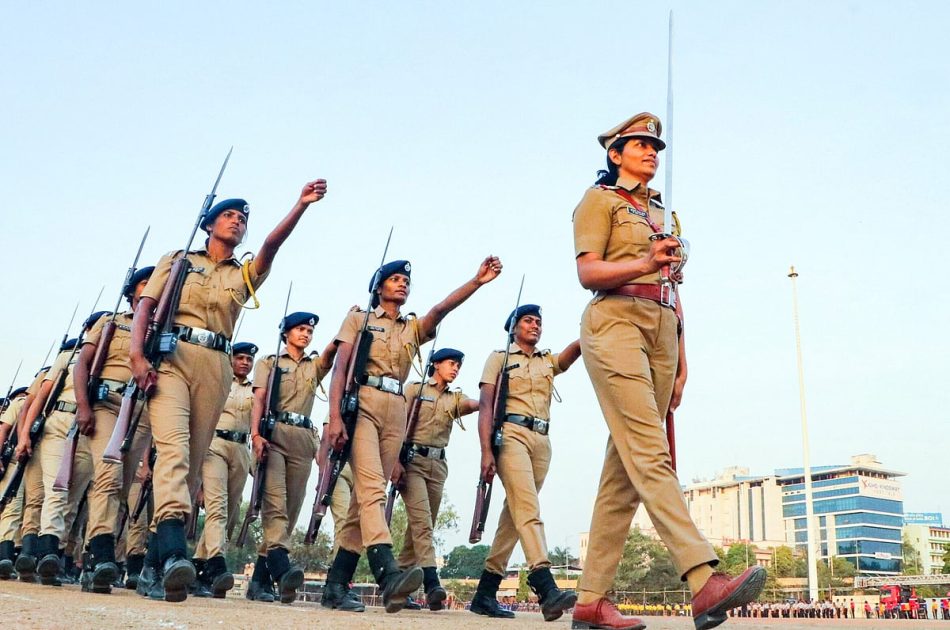
The study indicates that women remain under-represented in policing. As of 2022, women accounted for only 2.46 lakh personnel out of a total police strength of over 20.93 lakh, which is approximately 11.75%. While this is an improvement from 1.79% in 2001 and 7.10% in 2016, the representation is still low.
Data from Tamil Nadu
Examining data from Tamil Nadu, the study notes a strong participation of women in police recruitment. In 2022, approximately 66,870 applications were received for 662 posts for women constables, and 44,005 applications were submitted for 133 sub-inspector positions. This indicates a substantial pool of candidates entering the police system.
The ADR Paradox
The study introduces a concept referred to as the “ADR paradox.” While increased participation of women in policing enhances access and encourages reporting, there is also a tendency for cases, particularly domestic violence cases, to be resolved through alternative dispute resolution (ADR) mechanisms. These mechanisms include counseling and mediation, which can lead to quicker resolutions.
However, the study cautions that excessive reliance on ADR can result in under-reporting by victims and under-recording by police, creating a false sense of social safety. This reliance may weaken the long-term effectiveness of the criminal justice system. Informal settlements, especially in cases of repeated abuse, may fail to deter offenders and can contribute to the recurrence of violence.
Recommendations
While increasing the representation of women in policing is crucial for improving access and trust in the system, the study emphasizes that this must be accompanied by stronger institutional practices. These practices should ensure proper registration, investigation, and prosecution of cases. The research highlights the need for a balanced approach that integrates both formal justice processes and necessary support systems for victims.
Conclusion
The IIT Madras study sheds light on the complexities of domestic violence reporting and resolution in India. It underscores the importance of women’s representation in policing while also addressing the challenges posed by informal dispute resolution mechanisms. As the study illustrates, improving the formal justice system is essential for ensuring that victims of domestic violence receive the support and protection they need.
Note: The findings of this study are critical for policymakers, law enforcement agencies, and social workers as they strive to create a more effective and responsive justice system for victims of domestic violence.


