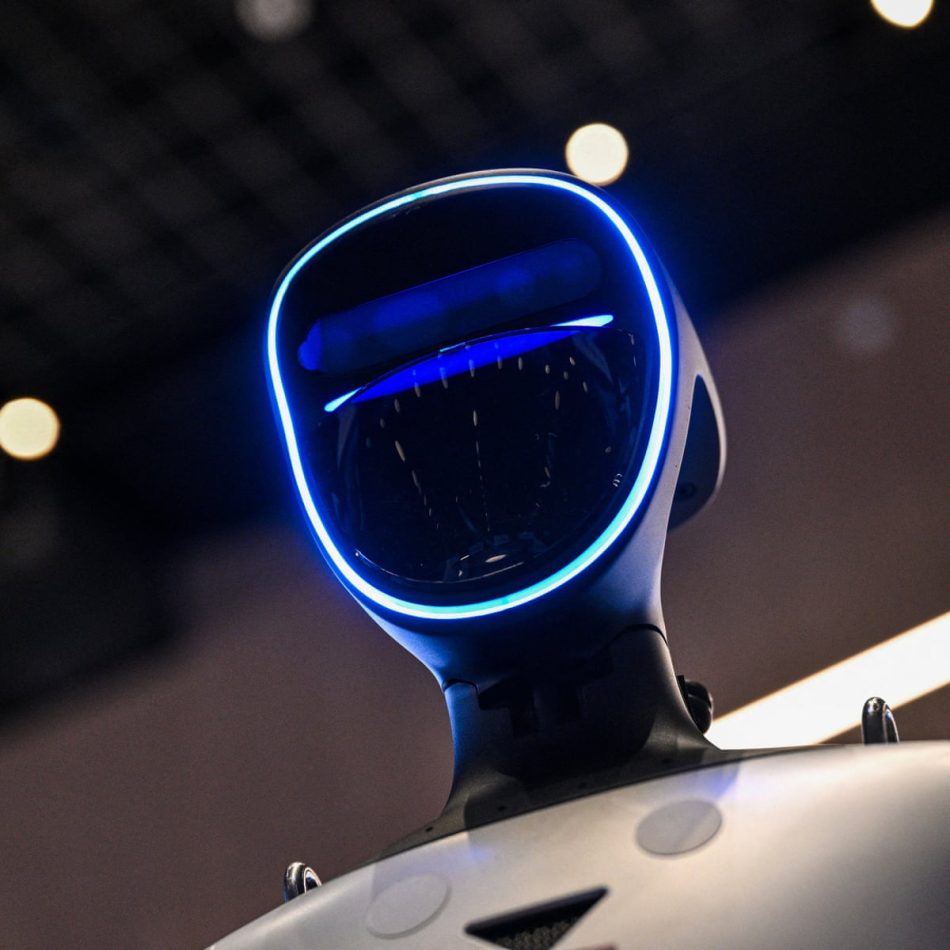
Inside China’s robotics revolution
China is undergoing a significant transformation in the field of robotics, with advancements that promise to reshape industries and labor markets. This article explores the current state of robotics in China, highlighting key players, technological innovations, and the implications for the future of work.
The Rise of Robotics in China
In recent years, China has emerged as a global leader in robotics, driven by a combination of government support, private investment, and technological innovation. The country is investing heavily in the development of humanoid robots capable of performing tasks traditionally carried out by human workers. This shift is not just a technological trend; it represents a fundamental change in how industries operate.
Key Players in the Robotics Sector
Among the notable companies leading the charge in China’s robotics revolution is Guchi Robotics, founded by Chen Liang in 2019. Guchi specializes in automation solutions for the automotive industry, providing robots that assemble critical components such as wheels, dashboards, and windows for major car manufacturers like BYD and Nio.
Chen Liang, an engineer by training, has dedicated his career to solving complex engineering problems. His goal is to automate as much of the final assembly process in car manufacturing as possible. Currently, Guchi’s robots can autonomously mount wheels and dashboards, but Chen estimates that 80% of the final assembly process remains to be automated.
Technological Innovations Driving Change
The backbone of China’s robotics boom is advanced technologies, particularly deep learning. This mathematical engine enables machines to learn from vast datasets, allowing them to perform tasks with increasing dexterity and efficiency. The integration of artificial intelligence with robotics is poised to revolutionize various sectors, particularly manufacturing.
Government Support and Funding
In 2025, the Chinese government announced a staggering £100 billion fund aimed at fostering strategic technologies, including robotics. This funding is complemented by local government investments in robotics projects, which have led to the emergence of approximately 140 companies focused on developing humanoid robots.
Public Perception and Cultural Impact
China’s robotics advancements are not just confined to factories; they are also becoming a part of popular culture. At the recent lunar new year festival gala, robots showcased their capabilities by performing comedy sketches and martial arts routines, captivating an audience of hundreds of millions. This public display serves to communicate a clear message: China is positioning itself as a leader in robotics innovation.
The Race to Automate Labor
During a recent visit to Guchi Robotics, I witnessed firsthand the collaboration between robotics companies and major corporations. A team from General Motors was testing Guchi’s wheel-installation machines in preparation for a shipment to Canada. The implications of such technology are profound, as it enables companies to streamline operations and reduce labor costs.
Job Reduction and Economic Implications
As companies like General Motors adopt robotics, the impact on employment is significant. According to an engineer from GM, the integration of Guchi’s machines is expected to eliminate 12 assembly jobs at a single factory. While companies emphasize that technology enhances safety and efficiency, the reality is that automation often leads to job displacement.
Global Competition and Comparisons
China’s rapid advancements in robotics have led to a competitive landscape where the country accounts for over half of the world’s new factory robot installations annually. Chen Liang believes that the skill and talent of Chinese engineers are comparable to their American counterparts. However, he highlights that the difference lies in cost, speed, and the sheer number of engineers available to tackle complex problems.
The Future of Robotics in China
As China continues to invest in robotics and artificial intelligence, the future of work is likely to be transformed. The ongoing development of humanoid robots capable of performing labor-intensive tasks raises important questions about the nature of employment and the skills required in the workforce of tomorrow.
Challenges Ahead
Despite the rapid progress, challenges remain. The ethical implications of replacing human workers with robots, the need for retraining displaced workers, and the potential for increased inequality are pressing issues that must be addressed as the robotics revolution unfolds.
Conclusion
China’s robotics revolution is a testament to the nation’s commitment to technological advancement and industrial innovation. With significant investments and ambitious goals, the country is on a path to reshape the future of work. As robotics technology continues to evolve, it will be crucial to navigate the challenges and opportunities that arise in this new landscape.
Note: This article reflects the state of robotics in China as of 2023 and may evolve as new developments occur.