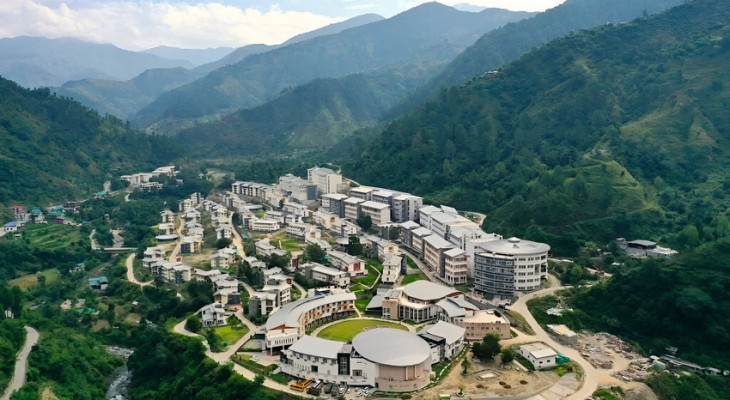
Mapping the Future of Water: IIT Mandi’s Groundbreaking Study on the Beas Basin
Water is life, and in the Beas Basin of Himachal Pradesh, scientists are working to secure it for generations to come. Researchers at the Indian Institute of Technology (IIT) Mandi have conducted a landmark study that provides a comprehensive overview of groundwater availability in the region, highlighting areas of abundance and potential scarcity.
The Importance of Groundwater Mapping
Groundwater is a crucial resource for agriculture, drinking water, and ecosystem health. The study by IIT Mandi utilizes advanced tools such as satellite-based remote sensing and Geographic Information System (GIS) technology to create a detailed map of groundwater zones within the Beas Basin. This map serves as an essential resource for policymakers, communities, and farmers who rely on this vital resource.
Regions of Groundwater Abundance
The western Beas Basin is identified as the most groundwater-rich area. Key districts in this region include:
- Kangra
- Dehradun
- Gopipur
- Jwalamukhi
- Jawali
- Nurpur
- Pong Dam
- Lower Dharamshala
- Una border
These areas are classified into high and very high groundwater zones, indicating a strong potential for sustaining water needs well into the future.
Central Beas Basin: A Balancing Act
In the central Beas Basin, which includes Mandi district, Balh Valley, Sundernagar, and Jogindernagar, groundwater availability is moderate. While these regions are not currently facing immediate danger, they require careful management to prevent future crises. Sustainable practices and monitoring will be essential to maintain groundwater levels in these areas.
Challenges in the Eastern Region
The eastern and mountainous stretches of the Beas Basin present a starkly different picture. Areas such as:
- Kullu
- Manali
- Banjar
- Ani
- Upper Mandi
- The Himalayan belt near Rohtang Pass
fall under low and very low groundwater zones. Without timely intervention and sustainable water management practices, water scarcity in these regions could worsen, jeopardizing both livelihoods and local ecosystems.
The Science Behind the Study
The research team, led by faculty members Derix P. Shukla and Deepak Swami, along with researcher Utsav Rajput, analyzed a decade of rainfall data from 2012 to 2021. They also considered various factors affecting groundwater availability, including:
- Land use
- Slope
- Geology
- Soil texture
- Drainage density
The culmination of this analysis resulted in a comprehensive groundwater availability map for 2022, which was published in the journal Environmental Earth Sciences.
Significance of the Research
This research is notable for its simplicity and accessibility. It does not rely on expensive machinery; rather, it employs smart use of existing satellite data and GIS analysis. The method is low-cost, fast, and scalable, making it a valuable tool for governments and communities across India’s river basins.
The findings emphasize the importance of informed planning and conservation efforts. With proactive measures, water security in the Beas Basin—and beyond—can be ensured for future generations.
Conclusion
The groundbreaking study by IIT Mandi underscores the critical need for sustainable water management in the Beas Basin. As climate change and population growth continue to exert pressure on water resources, the insights gained from this research will be invaluable in guiding policy and community actions aimed at preserving this essential resource.
Note: This article reflects the findings and implications of the study conducted by IIT Mandi and aims to raise awareness about groundwater management in the Beas Basin.