Pune Collector Calls IIT Delhi Team for Scientific Review of Navale Bridge Stretch
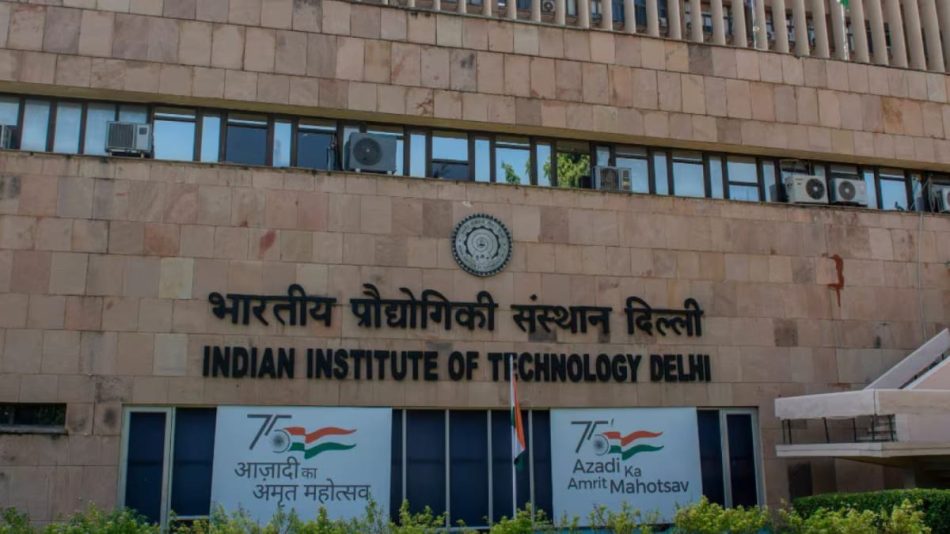
In response to a serious accident, Pune district collector Jitendra Dudi has announced a technical evaluation of the Navale bridge stretch by a team from IIT Delhi. This scientific audit, prompted by recurring crashes and discussions with the Supreme Court Committee on Road Safety, aims to identify engineering flaws and provide a roadmap for corrective measures.
Background of the Issue
The Navale bridge has been a site of significant concern due to a series of accidents that have raised alarms regarding road safety in the area. Following a major incident on Thursday, which reignited fears among commuters, Dudi confirmed that this would be the first scientific audit conducted on this section of NH-48.
Collaboration with IIT Delhi
Collector Dudi communicated with retired Supreme Court judge Abhay Manohar Sapre, who leads the Supreme Court Committee on Road Safety (SCCORS). The discussions centered around the frequent accidents along the Navale bridge–Narhe stretch. Dudi stated, “We have decided that such accident inquiries need to be done scientifically and with modern technical expertise, and that can be done only by IIT Delhi, who have experts working on the field.”
Identifying Engineering Flaws
The IIT Delhi team is tasked with examining several critical factors that contribute to the safety issues on this stretch. These factors include:
- Road geometry
- Gradient issues
- Braking distances
- Visibility constraints
- Signage adequacy
- Traffic merging patterns
Dudi emphasized the importance of a detailed technical assessment that identifies all engineering flaws and provides a clear roadmap for corrective measures.
Plans for Infrastructure Improvement
In addition to the IIT Delhi evaluation, the collector is planning consultations with the Maharashtra State Road Development Corporation (MSRDC) to expedite the work on the proposed outer ring road, particularly at the Navale bridge stretch. Dudi noted, “If the outer ring road can be taken up on priority at this stretch, a large volume of traffic can be diverted away from Navale bridge as early as possible.” He acknowledged that the existing infrastructure is severely overstretched.
Ongoing Monitoring and Recommendations
Justice Sapre has been actively involved in road safety enforcement in Pune, focusing on helmet compliance, speeding checks, and stricter monitoring of traffic violations. He has been closely tracking the accident patterns on the Navale bridge stretch. The SCCORS has advocated for better engineering interventions alongside enforcement, as the bridge continues to account for a disproportionate number of major crashes.
Data-Driven Approaches to Road Safety
The committee is committed to promoting best practices in road safety and has been urging local authorities to adopt data-driven approaches for accident-prone zones. The upcoming evaluation by IIT Delhi is expected to become a benchmark for future mitigation efforts in Pune.
Urgency for Corrective Action
With repeated collisions causing distress among commuters and residents, Dudi stressed the need for prompt action. “We need to take corrective action quickly — scientifically, comprehensively, and with expert guidance,” he stated. The IIT Delhi team is expected to visit Pune next week, and their findings will guide both immediate and long-term interventions on the stretch.
Conclusion
The district administration is determined to push all relevant agencies, including the National Highways Authority of India (NHAI), Public Works Department (PWD), MSRDC, and Pune Municipal Corporation (PMC), to implement the recommendations without delay. The focus remains on enhancing road safety and preventing further accidents on the Navale bridge stretch.
Note: The situation regarding road safety is dynamic and ongoing assessments are crucial for ensuring the safety of all commuters.