Tamil Nadu and Gujarat could serve as models for the country’s clean energy transition: India’s Climate and Energy Frontiers (ICEF) report, prepared by Schmidt Sciences with IIT Madras
According to a recent report titled India’s Climate and Energy Frontiers (ICEF), prepared by Schmidt Sciences in collaboration with the Indian Institute of Technology (IIT) Madras, Tamil Nadu and Gujarat are positioned to serve as exemplary models for India’s clean energy transition. This report highlights the critical role of industrial policy in attracting investments in the clean energy sector, which is essential for India’s low-carbon growth.
The Importance of Industrial Policy
The ICEF report emphasizes that a well-formulated industrial policy is vital for fostering employment in emerging sectors such as:
- Solar equipment manufacturing
- Battery storage
- Green hydrogen
- Electric mobility
Currently, India has prioritized renewable energy deployment over the development of domestic industries, leading to a heavy reliance on imports for clean energy components. For instance, approximately 80% of solar module components and lithium-ion cells are sourced from China. The report suggests that states like Tamil Nadu and Gujarat are effectively leveraging their industrial policies to attract investments in clean energy, thereby setting a benchmark for other states to follow.
Land-Based Carbon Sequestration
In addition to expanding clean energy, the ICEF report identifies land-based carbon sequestration as a significant pillar of India’s decarbonization strategy. The report indicates that India’s forests, agricultural lands, and natural ecosystems currently have the capacity to absorb nearly half a billion tonnes of carbon dioxide annually. This is equivalent to removing 113 million cars from the roads.
With enhanced monitoring, improved data systems, and coordinated research efforts, this carbon absorption potential could increase by as much as 400%. This highlights the need for a comprehensive approach to environmental management that integrates various sectors and promotes sustainability.
Connecting Climate and Energy Challenges
Professor Ashwin Mahalingam from the School of Sustainability at IIT Madras remarked that the challenges related to climate and energy can no longer be addressed through isolated sectoral approaches. Despite scientific advancements in areas such as clean energy technologies, urban design, and environmental modeling, the ability to connect these advancements remains inadequate.
The report stresses that approximately 90% of the infrastructure required for India’s near-term economic goals has yet to be constructed. This presents a unique opportunity to embed sustainability principles from the onset of infrastructure development, ensuring that future growth is aligned with environmental goals.
Investment Opportunities in Clean Energy
The report outlines several investment opportunities in the clean energy sector that can be harnessed by states like Tamil Nadu and Gujarat:
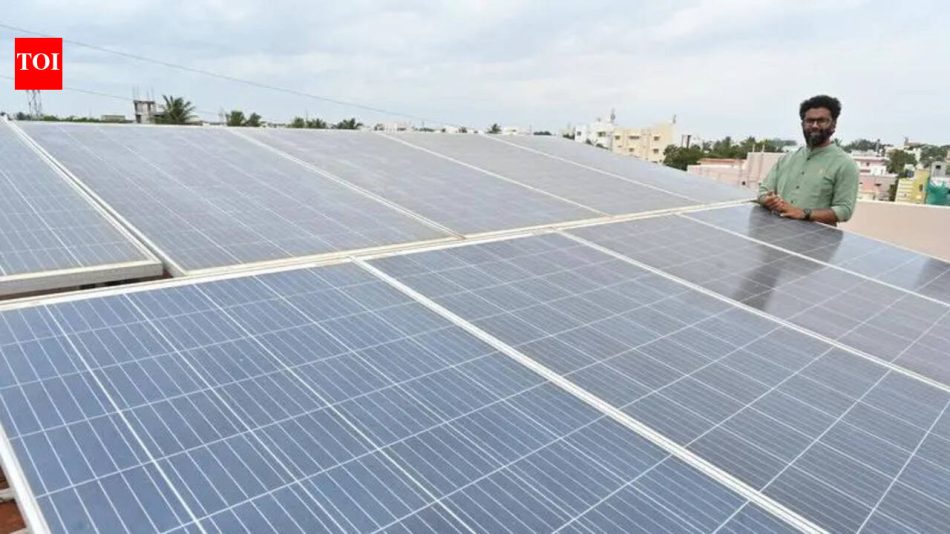
- Solar Energy: Both states have made significant strides in solar energy deployment, with Tamil Nadu being one of the leading states in solar power generation.
- Wind Energy: Gujarat has a robust wind energy sector, contributing significantly to the state’s renewable energy capacity.
- Electric Mobility: With the growing demand for electric vehicles, investments in battery manufacturing and charging infrastructure are crucial.
- Green Hydrogen: As a future fuel, green hydrogen presents an opportunity for states to innovate and lead in this emerging sector.
Conclusion
Tamil Nadu and Gujarat are not just leading the charge in clean energy but are also setting a precedent for other states in India to follow. By focusing on industrial policy, land-based carbon sequestration, and integrated approaches to climate and energy challenges, these states can effectively contribute to India’s overall clean energy transition. The ICEF report serves as a guiding document for policymakers and stakeholders in the clean energy sector, emphasizing the need for coordinated efforts to achieve a sustainable future.
Note: The information presented in this article is based on the ICEF report prepared by Schmidt Sciences and IIT Madras, reflecting the current state of clean energy initiatives in India as of April 2026.