The biggest advance in AI since the LLM
By Gary Marcus
Artificial Intelligence (AI) has seen numerous advancements over the years, but few have been as significant as the introduction of Claude Code. This innovative coding agent has the potential to revolutionize how programmers write code, marking it as the most substantial advancement in AI since the development of Large Language Models (LLMs).
What is Claude Code?
Claude Code is not merely an extension of existing LLM technology; it represents a hybrid approach that combines elements of classical symbolic AI with modern neural network techniques. This fusion allows Claude Code to achieve greater accuracy and reliability in coding tasks, addressing some of the limitations inherent in traditional LLMs.
The Core of Claude Code
At the heart of Claude Code lies a kernel known as print.ts, which consists of 3,167 lines of code. This kernel employs pattern matching, a technique traditionally associated with LLMs. However, Claude Code diverges from the probabilistic nature of pure LLMs by incorporating deterministic, symbolic elements. This approach ensures that the patterns it generates are more reliable and less erratic.
Symbolic AI Techniques
One of the key features of Claude Code is its use of classical symbolic AI techniques. The kernel is structured around a series of IF-THEN conditionals, featuring 486 branch points and 12 levels of nesting. This design is reminiscent of the foundational work done by pioneers in AI such as John McCarthy, Marvin Minsky, and Herb Simon, who emphasized the importance of symbolic reasoning in artificial intelligence.
The Neurosymbolic Approach
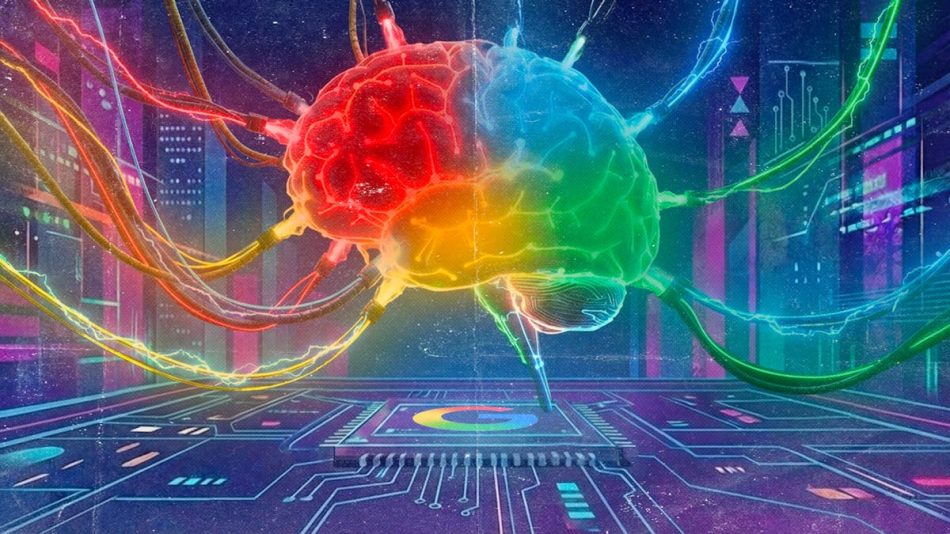
The development of Claude Code signifies a shift towards what is known as neurosymbolic AI. This approach combines the strengths of neural networks with the precision of symbolic reasoning. Gary Marcus, a prominent advocate for this methodology, has long argued that integrating these two paradigms is essential for the future of AI.
Advancements in Neurosymbolic AI
Neurosymbolic AI has already made its mark in various applications, including:
- AlphaFold: A system that predicts protein structures.
- AlphaEvolve: A tool for evolutionary algorithms.
- AlphaProof: A system for automated theorem proving.
- AlphaGeometry: A tool for geometric reasoning.
These examples highlight the versatility and effectiveness of neurosymbolic AI in tackling complex problems across different domains.
Why Claude Code is a Game Changer
Claude Code’s superiority does not stem from mere scaling but rather from its neurosymbolic architecture. Anthropic, the organization behind Claude Code, has recognized the importance of integrating classical AI techniques with neural networks. This realization marks a pivotal moment in the evolution of AI, as it shifts the focus from scaling alone to a more nuanced approach that combines various methodologies.
Implications for the Future of AI
The implications of this shift are profound. By incorporating symbolic AI elements, Claude Code can produce more reliable and efficient code. This advancement challenges the notion that scaling is the sole driver of innovation in AI. As the landscape of AI continues to evolve, the integration of neurosymbolic techniques will likely play a crucial role in shaping future developments.
Challenges Ahead
Despite its groundbreaking capabilities, Claude Code is not without its flaws. The symbolic components of the system require further refinement, as noted by experts in the field. For instance, while Claude Code can generate code patterns, it may not fully grasp the intricacies of programming and design. This highlights the need for ongoing advancements in software engineering to enhance the effectiveness of neurosymbolic AI.
Conclusion
As we look to the future of AI, the emergence of Claude Code represents a significant milestone in the journey towards more reliable and trustworthy artificial intelligence. By embracing a neurosymbolic approach, researchers and developers can pave the way for innovations that transcend the limitations of traditional LLMs. The journey is far from over, and continued exploration of knowledge-driven, reasoning-based AI will be essential in realizing the full potential of this technology.
Note: The advancements in AI, particularly with neurosymbolic approaches, underscore the importance of integrating diverse methodologies to achieve more reliable outcomes. Ongoing research and development will be crucial in addressing the challenges that remain.