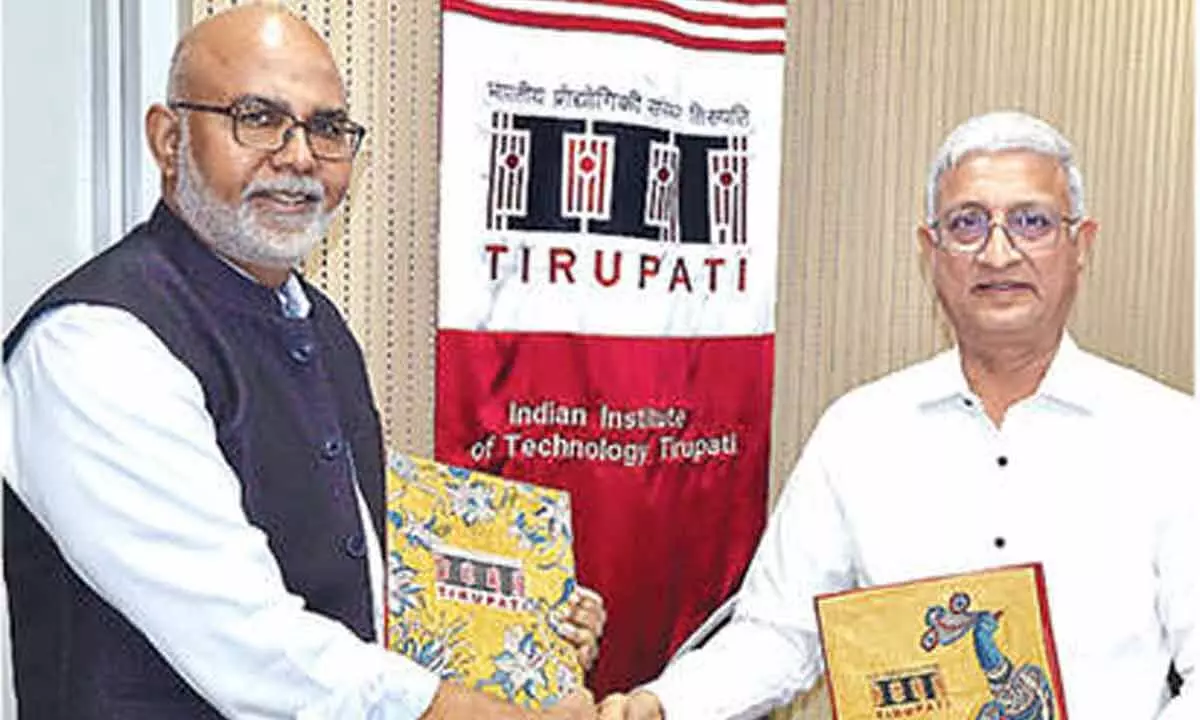
Dal partners with top Indian research universities to develop innovation campus
Dalhousie University has announced a groundbreaking partnership with two of India’s premier research institutions, the Indian Institute of Technology (IIT) Tirupati and the Indian Institute of Science Education and Research (IISER) Tirupati. This collaboration aims to establish a flagship innovation campus in Tirupati, India, designed to connect graduate training and research with industry, thereby driving innovation and expanding market opportunities for both Canada and India.
The Tirupati Tri-Institutional Global Innovation Campus
The new campus will be strategically located in the eastern Indian city of Tirupati, adjacent to the existing campuses of IIT Tirupati and IISER Tirupati. The initiative will unfold in phases over the next decade, beginning with collaborative programming and industry sponsorship before scaling up to shared physical spaces.
Dalhousie President Kim Brooks expressed pride in working with IIT Tirupati and IISER Tirupati, emphasizing the importance of connecting research, talent, and industry to foster shared prosperity in both nations. The announcement was made during an event in Mumbai, attended by Canadian Prime Minister Mark Carney and Minister of Foreign Affairs Anita Anand, highlighting the Canadian government’s commitment to strengthening economic ties with India.
Accelerating Innovation Across Borders
This partnership leverages the distinct capabilities of each institution, facilitating the transition of ideas from fundamental science to applied engineering and scalable solutions. The collaboration will be supported by industry engagement, talent development, and pathways for global adoption.
Areas of Focus
The initiative will focus on establishing centers of excellence in several key sectors, including:
- Clean energy
- Critical minerals and electric mobility
- Digital and precision agriculture
- Health technologies and biomanufacturing
- Digital systems and applied AI
Highly skilled learners will benefit from industry-embedded professional master’s programs, co-supervised doctoral training, and executive education on the campus. This environment will also facilitate collaboration between Canadian and Indian firms, allowing them to explore new opportunities and access each other’s markets and supply chains.
Innovative Training and Academic Collaboration
The partnership will integrate innovation training into graduate programs, providing learners with access to intellectual property (IP), regulatory, and market-entry support, as well as industry-sponsored applied challenges. Additionally, the collaboration will enable:
- Joint-degree delivery
- Hybrid learning opportunities
- Executive and professional education
- Short courses and leadership programs
- Mobility for faculty, students, and professionals
A Century of Collaboration
This partnership marks a significant milestone, occurring a century after Dalhousie first established its relationship with Indian students. The university welcomed its first two Indian students, Manilal Shankerohai Patel and Simon Tholath Paul, in 1926 as part of its medical school. Over the years, Dalhousie has developed numerous collaborations with Indian institutions, currently partnering with 23 universities and offering nine joint-degree programs. In the past five years, Dal researchers have co-authored 429 publications with colleagues from 320 Indian institutions.
Moving Beyond Traditional Exchange
What sets this new partnership apart is its focus on co-created, co-located two-way exchanges, moving beyond traditional models of exchange and mobility. The collaboration is specifically designed to enhance economic and innovation infrastructure, supporting shared prosperity between the two nations.
Dr. K. N. Satyanarayana, director of IIT Tirupati, expressed enthusiasm for building a collaborative ecosystem with Dalhousie University and IISER Tirupati. He noted that the initiative aligns innovation, research, and graduate education with industry needs for emerging global markets.
Strategic Location and Future Prospects
Locating the campus in Tirupati allows for better integration of science and engineering between the two Indian universities and offers immediate proximity to an international airport. The availability of land nearby ensures ample space for pilot facilities, potential industry co-location, and long-term expansion.
Dr. Santanu Bhattacharya, director of IISER Tirupati, emphasized that this proposed campus signifies a major milestone in Indo-Canadian cooperation aimed at advancing academic and research excellence. He highlighted the initiative’s focus on areas of strategic importance to both nations, seamlessly integrating science, technology, and industry to nurture young innovators into globally competitive scholars.
Recent Collaborations and Future Directions
In addition to the Tirupati campus initiative, Dalhousie University has signed two Memoranda of Understanding (MOUs) with separate Indian institutions. One MOU with the SRM Institute of Science and Technology aims to establish a Nursing Dual Degree Program, which includes Indian Nursing Council-approved supernumerary seats, dual credentials, and embedded clinical experience in Canada. This agreement also extends to academic cooperation and student mobility, creating pathways for nursing practice in Nova Scotia.
Another MOU with the Indian Council of Agricultural Research (ICAR) focuses on collaboration in digital agriculture, climate-resilient agriculture, horticulture, aquaculture, and animal husbandry. This agreement emphasizes joint research and broader academic cooperation across these priority areas.
Conclusion
The collaboration between Dalhousie University and India’s leading research institutions marks a significant step towards enhancing innovation and academic excellence. By establishing the Tirupati Tri-Institutional Global Innovation Campus, both nations aim to address global challenges through knowledge, innovation, and industrial partnership.
Note: This article is based on information available as of February 2026 and may be subject to updates as the partnership progresses.