IIT Madras’s next-gen predictive charging tech for EVs
As the world moves towards sustainable mobility, electric vehicles (EVs) are becoming increasingly popular. However, challenges such as slow charging speeds, battery degradation, and the strain on power grids remain significant hurdles. Researchers at the Indian Institute of Technology Madras (IIT Madras) have made a groundbreaking advancement in addressing these issues with their innovative predictive charging technology.
Overview of the New Technology
The IIT Madras team has developed a pioneering predictive control strategy specifically designed for off-board EV chargers. This technology is the first of its kind globally and aims to enhance the efficiency and lifespan of EV batteries while also minimizing the impact on the electrical grid.
Key Benefits of the Predictive Control Framework
- Improved Charging Speeds: The predictive control strategy optimizes the flow of electricity, ensuring faster charging times for EVs.
- Battery Health Maintenance: By minimizing fluctuations in current and voltage, the technology reduces internal stress and heat within battery cells, thereby prolonging battery life.
- Grid Stability: The framework helps maintain high power quality during simultaneous charging, preventing disruptions to the local electrical network.
Research Background
The research was co-authored by PhD scholar Durga Prasad Pilli and assistant professor Deepak Ronanki from the Department of Engineering Design at IIT Madras, along with international collaborators. Their findings were published in the prestigious journals ‘IEEE Transactions on Power Electronics’ and ‘IEEE Transactions on Industrial Electronics’.
Addressing Industry Challenges
According to Ronanki, one of the primary concerns for EV users is battery health. The predictive strategy developed by the IIT Madras team directly addresses this concern by ensuring a smoother flow of electricity. This innovation not only enhances battery longevity but also improves safety and reduces long-term maintenance costs, which are crucial for the widespread adoption of electric vehicles.
Impact on Urban Infrastructure
The implications of this technology extend beyond individual EVs. As more electric vehicles are integrated into urban environments, the potential for grid instability increases. The IIT Madras framework acts as a safeguard for urban infrastructure, allowing chargers to draw electricity without causing disruptions or violating international power quality standards.
Supporting India’s EV Ecosystem
As India continues to scale its EV charging ecosystem, this grid-compatible approach is vital for utilities to maintain a stable power supply, even as the demand for electricity rises. The technology developed by IIT Madras provides a scalable blueprint for the country’s decarbonization goals, which are essential for achieving a sustainable future.
From Theory to Real-World Application
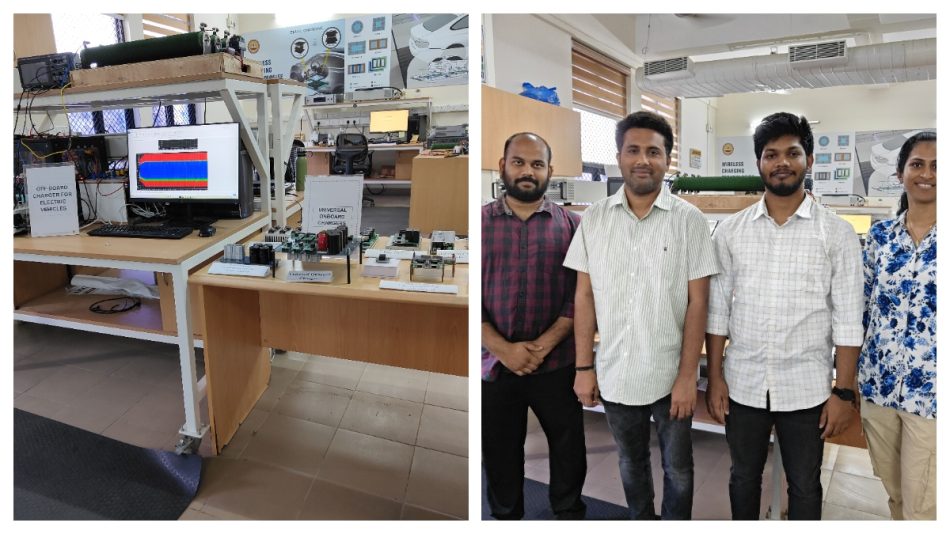
The research team has moved beyond theoretical modeling and has validated their methods using lab prototypes and real-time controllers. This means that the technology is ready for real-world deployment, with significant implications for India’s highway charging corridors and urban hubs.
Cost Reduction for Charging Station Operators
By reducing operating costs for charging station operators and improving energy utilization, the IIT Madras technology presents a compelling case for investment in EV infrastructure. The ability to efficiently manage electricity demand will not only benefit operators but also enhance the overall user experience for EV owners.
Conclusion
The development of predictive charging technology by IIT Madras represents a significant step forward in the electric vehicle industry. By addressing critical issues such as battery health, charging speeds, and grid stability, this innovative framework has the potential to transform the landscape of EV charging in India and beyond. As the adoption of electric vehicles continues to grow, advancements like these will play a crucial role in ensuring a sustainable and efficient future for transportation.
Note: The information presented in this article is based on research published in February 2026 and reflects the latest advancements in electric vehicle technology.