‘Dalits to Palestinians?’ IIT Delhi Conference Sparks Debate Over Ideological Bias in Academia
A recent conference hosted by the Humanities and Social Sciences Department at the Indian Institute of Technology (IIT) Delhi has ignited a significant debate regarding ideological bias in academia. The event, titled “Towards a Critical Philosophy of Caste and Race,” drew attention for its provocative parallels between Dalit issues in India and global political conflicts, particularly the situation in Palestine.
Overview of the Conference
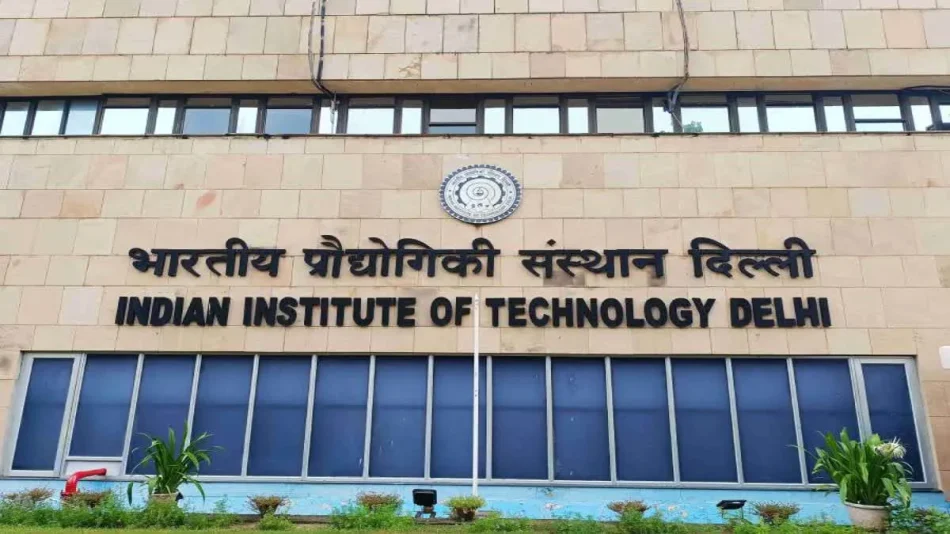
The Critical Philosophy of Caste and Race (CPCR3) conference was held in the Senate Hall of IIT Delhi’s main building. It featured a series of sessions that many observers have characterized as overtly ideological and activist-driven, rather than focused on balanced academic inquiry.
Keynote Sessions and Themes
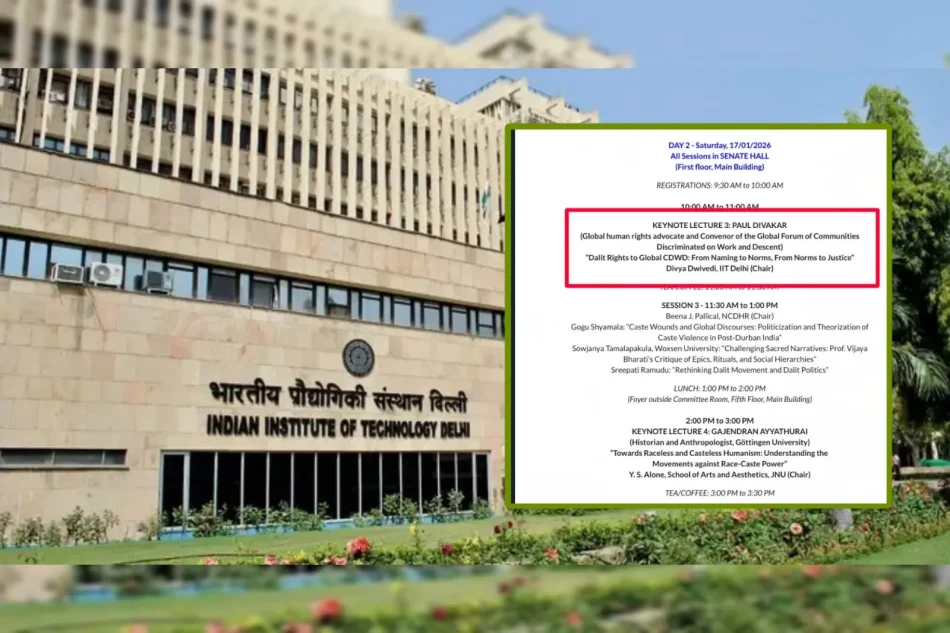
The conference included notable keynote lectures aimed at framing caste and race within broader global contexts. Divya Dwivedi, a faculty member at IIT Delhi, chaired the conference and delivered the opening keynote. The official schedule revealed a variety of sessions, including:
- Paul Divakar: A global human rights advocate, Divakar’s lecture titled “Dalit Rights to Global CDWD: From Naming to Norms, From Norms to Justice” sought to position caste within international rights frameworks.
- Gajendran Ayyathurai: A historian and anthropologist from Göttingen University, Ayyathurai presented on “Towards Raceless and Casteless Humanism: Understanding the Movements against Race-Caste Power.”
Controversial Comparisons and Panel Discussions
The conference sparked considerable controversy, particularly due to sessions that explicitly linked India’s caste dynamics with global political issues. One such session was chaired by Gajendran Ayyathurai and featured a presentation by independent researcher Aarushi Punia, titled “What’s common between Dalits and Palestinians?”
This comparison has faced strong criticism, with detractors arguing that it oversimplifies complex social realities in India by importing foreign geopolitical conflicts into local discourse. Critics contend that such framing advances ideological positions rather than fostering scholarly analysis.
International Perspectives on Caste
Another prominent speaker at the conference was Thenmozhi Soundararajan from Equality Labs, who discussed “25 Years of Racial and Caste Equity Impact of Durban on Dalit Americans.” This session continued the theme of internationalizing caste discourse through the lens of race politics in the United States.
Reinterpreting Indian Traditions
Several sessions focused on reinterpreting Indian traditions and social structures through a critical lens. Topics included:
- Challenging Sacred Narratives: A critique of epics, rituals, and social hierarchies.
- Caste Wounds and Global Discourses: An exploration of the politicization and theorization of caste violence.
Speakers from various institutions, including Jawaharlal Nehru University (JNU) and the Indira Gandhi National Open University (IGNOU), participated in these discussions, examining caste through frameworks of intersectionality and global power structures.
Book Launch and Intellectual Plurality
The conference also featured the launch of Gajendran Ayyathurai’s book, “Tamil Buddhism and Brahminism in Modern India: Deep Resistance against Caste (2025).” The book launch panel included academics from both Indian and foreign universities, further emphasizing the international dimension of the discussions.
However, the repeated presence of similar ideological perspectives across panels and keynotes raised concerns about the lack of intellectual plurality at the conference.
Criticism of ‘Woke’ Academic Culture
The agenda of the CPCR3 conference has attracted criticism from various scholars, students, and commentators. Many have accused the Humanities Department at IIT Delhi of promoting a “woke” ideological framework that prioritizes activism over academic balance. Critics argue that the conference provided little room for alternative perspectives on caste or Indian civilization, instead framing Indian social issues within a predetermined international activist narrative.
Debate Over Academic Neutrality
This controversy has reignited discussions about the role of elite academic institutions in hosting events perceived as advancing single-sided ideological positions. While conference organizers describe the event as a critical academic engagement with caste and race, the necessity for diverse viewpoints to uphold intellectual rigor remains a point of contention.
As discussions continue both on and off campus, the CPCR3 conference has become a focal point in the ongoing debate over academic freedom, ideological bias, and the evolving direction of humanities education in India.
Similar Cases from the Past
The controversy surrounding the CPCR3 conference is not an isolated incident. There have been several notable cases in Indian academia that reflect similar tensions:
- Jawaharlal Nehru University (JNU): JNU has frequently been at the center of controversies linked to events perceived as hostile to India’s sovereignty. The 2016 Afzal Guru–Maulana Azad event, which involved slogans calling for the disintegration of India, led to nationwide outrage and legal repercussions.
- IIT Madras – Ambedkar-Periyar Study Circle Controversy (2015): IIT Madras faced backlash when the Ambedkar-Periyar Study Circle was derecognized after complaints about promoting hatred against the Prime Minister and Indian nationalism. Although recognition was later restored, the incident highlighted the intersection of identity politics and ideological activism in academic spaces.
- University of Hyderabad: The University of Hyderabad has also experienced controversies surrounding its academic narratives, particularly in relation to caste and social justice issues.
Conclusion
The CPCR3 conference at IIT Delhi has sparked a significant debate about the ideological bias in academia, particularly concerning the framing of caste and race issues. As the discourse evolves, it remains essential for academic institutions to foster diverse perspectives and uphold intellectual rigor in the pursuit of knowledge.
Note: The information presented in this article is based on events and discussions surrounding the CPCR3 conference and reflects ongoing debates in the academic community.