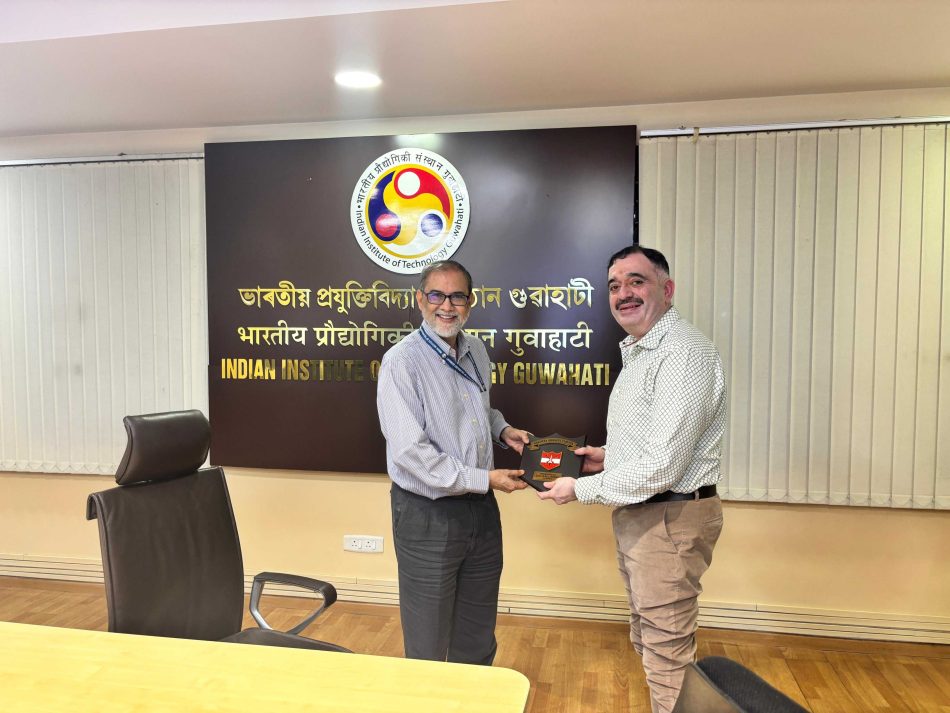
MeitY, IndiaAI Host Human Capital AI Meet at IIT Guwahati
The Ministry of Electronics and Information Technology (MeitY), in collaboration with the IndiaAI Mission, the Government of Assam, and IIT Guwahati, is hosting a two-day Human Capital Working Group Meeting at the IIT Guwahati campus. This significant event, taking place from January 5 to 6, 2026, aims to bring together policymakers, academics, and industry experts to shape India’s approach to AI-driven workforce transformation.
Event Overview
The Human Capital Working Group Meeting serves as a thematic precursor to the upcoming India AI Impact Summit 2026, which is scheduled to take place in New Delhi from February 15 to 20. The meeting is chaired by Prof. T G Sitharam, who is also the Chair of the Human Capital Working Group.
Opening Session Highlights
The opening session of the meeting featured several prominent speakers, including:
- Syedain Abbasi, IAS, Special Chief Secretary, Government of Assam
- K S Gopinath Narayan, IAAS, Principal Secretary (IT), Government of Assam
- Prof. T G Sitharam, Chair, Human Capital Working Group
- Prof. Devendra Jalihal, Director, IIT Guwahati
- Shikha Dahiya, Joint Director, IndiaAI, MeitY
During the opening addresses, speakers emphasized the central role of human capital in India’s AI journey. They highlighted the need to move beyond conventional skilling models towards a framework that promotes lifelong learning, human augmentation, and institutional readiness.
Commitment to Inclusive AI Ecosystems
Prof. Devendra Jalihal, Director of IIT Guwahati, welcomed the participants and underscored the institute’s role as a convening platform that links policy, academia, and industry. He expressed IIT Guwahati’s commitment to fostering inclusive and socially responsive AI ecosystems.
Shikha Dahiya, Joint Director of IndiaAI, outlined the vision for the India AI Impact Summit 2026. She noted that the summit will focus on democratizing AI resources, building future-ready human capital, and amplifying perspectives from the Global South. Dahiya also mentioned that insights gathered from the deliberations in Guwahati would directly inform discussions at the summit.
Focus on Lifelong Learning and Adaptability
Prof. T G Sitharam stressed the importance of an inclusive and people-centric transition to an AI-enabled economy. He called for the establishment of lifelong learning ecosystems that prioritize adaptability and human judgment alongside technical skills. This approach is essential for ensuring that the workforce is prepared for the challenges presented by rapid advancements in AI technology.
Keynote Address: “Democratizing Competency in the Age of AI”
A key highlight of the first day was the keynote address delivered by Prof. Gautam Barua, Former Director of IIT Guwahati. His talk, titled “Democratizing Competency in the Age of AI,” examined the shift towards AI-enabled human augmentation. He emphasized the necessity for sovereign, sector-aligned AI systems that ensure security during workforce transitions.
Implications for Workforce Transformation
The discussions at the Human Capital Working Group Meeting are expected to have significant implications for workforce transformation in India. As AI continues to evolve, the need for a workforce that is not only technically skilled but also adaptable and capable of critical thinking becomes increasingly important.
Participants at the meeting are encouraged to explore innovative approaches to education and training that can prepare individuals for the future job market. This includes integrating AI into educational curricula and promoting interdisciplinary learning that combines technical skills with soft skills.
Looking Ahead: India AI Impact Summit 2026
The insights and recommendations from the Human Capital Working Group Meeting will play a crucial role in shaping the agenda for the India AI Impact Summit 2026. This summit is expected to bring together a diverse group of stakeholders, including government officials, industry leaders, and academic experts, to discuss the future of AI in India and its potential impact on various sectors.
By fostering collaboration among these stakeholders, the summit aims to create a roadmap for the responsible and inclusive development of AI technologies in India. The focus will be on ensuring that the benefits of AI are accessible to all segments of society, particularly marginalized communities.
Conclusion
The Human Capital Working Group Meeting at IIT Guwahati marks a significant step towards redefining India’s approach to workforce development in the age of AI. By prioritizing human capital and fostering inclusive learning environments, India can position itself as a leader in the global AI landscape.
Note: The information presented in this article is based on the event details as of January 2026 and may be subject to change as further developments occur.